
Modern businesses in the UK, USA, and Canada face a constant support storm. Customers expect answers in seconds, not hours. That pressure has pushed companies toward AI agents for customer support that feel fast, smart, and always available. These systems are no longer optional. They are becoming the backbone of modern service teams.
Unlike old chatbots that felt robotic, today’s systems act like intelligent teammates. They resolve customer queries instantly and keep operations smooth even during peak demand. Let’s explore how they work, why they matter, and where they deliver real business impact.
What Are AI Agents for Customer Support?
AI agents for customer support are intelligent digital systems designed to handle customer conversations across chat, email, and voice. They act like a virtual team member that never sleeps. These agents go far beyond basic scripts and instead understand intent, context, and tone.
Modern businesses use AI customer support agents to replace repetitive human tasks. They provide 24/7 customer support, ensuring customers never wait in long queues. Think of them as a virtual customer support agent that stays active all day and night while keeping communication consistent and professional.
A real example helps. Imagine an online store in Canada. A customer asks about delivery timing at midnight. Instead of waiting, an AI virtual assistant for support instantly replies with accurate shipping updates. No delay. No frustration. Just smooth service.
How AI Agents for Customer Support Work
Behind the scenes, AI agents for customer support rely on advanced technologies like machine learning and natural language processing. These systems analyze customer messages, detect meaning, and respond in real time.
First, the system reads the query. Then it understands customer intent accurately using conversational models. After that, it searches internal data or connected systems. Finally, it delivers a response that feels human and natural.
A key strength is adaptability. These systems learn from customer interactions over time. So the more they are used, the smarter they become. They also integrate with CRM systems, allowing businesses to access customer history instantly.
Here is a simple flow view:
Customer Message → Intent Detection → Data Lookup → Response Generation → Customer Reply
This structure powers AI-driven support platform solutions across industries. It also helps companies respond to customer inquiries in real time without human delays.
Key Features of AI Agents for Customer Support
Modern AI support automation tools come packed with powerful features that improve daily operations. They are designed to reduce friction and enhance speed.
One major feature is multi-channel support. These systems support multiple communication channels like chat, email, WhatsApp, and voice. Another important feature is automation. These routes support tickets automatically and assign them based on urgency.
A quick breakdown of core features:
| Feature | Business Impact |
| AI support ticket automation | Faster issue resolution |
| AI chatbot for customer service | Instant replies for common queries |
| CRM integration | Better customer insights |
| Sentiment analysis | Smarter response tone |
| Multilingual support | Global customer reach |
These tools act as a customer service automation software layer that connects everything. They also serve as AI customer engagement tools that help brands stay active and responsive 24/7.
Benefits of Using AI Agents for Customer Support
The biggest advantage of AI agents for customer support is speed. They reduce customer response time dramatically and eliminate waiting queues. Customers get answers instantly, which builds trust and loyalty.
Another strong benefit is efficiency. These systems automates customer service tasks like FAQs, tracking updates, and ticket creation. This allows human agents to focus on complex issues.
Businesses also see cost savings. AI tools reduce workload for support teams while still maintaining high-quality service. A SaaS company in the USA reported a 40% drop in support tickets after adopting AI-based customer service software.
Key benefits include:
- Faster customer response cycles
- 24/7 availability without extra staff
- Scalable operations during peak hours
- Improved customer satisfaction scores
Overall, these systems scale customer support operations without increasing costs or team size.
AI Agents vs Traditional Customer Support Teams
Traditional support teams rely heavily on human availability. That creates delays, especially during busy hours. In contrast, AI-powered customer support systems operate instantly and without fatigue.
However, humans still play an important role. AI handles routine tasks, while humans manage emotional or complex cases. This hybrid model is becoming the global standard.
Comparison table:
| Factor | AI Agents | Human Teams |
| Speed | Instant | Delayed |
| Availability | 24/7 | Limited hours |
| Consistency | High | Variable |
| Emotional understanding | Low | High |
AI systems clearly improve first response time while humans provide emotional intelligence. Together, they create a balanced support ecosystem.
Use Cases of AI Agents for Customer Support
Businesses across industries are now adopting AI contact center solutions. E-commerce platforms use them to track orders and handle returns. SaaS companies use them for onboarding and troubleshooting.
A practical case is a UK-based online retailer. They implemented an AI support assistant for business and reduced ticket volume by 35%. The system manages repetitive customer queries, freeing human agents for high-value tasks.
Common use cases include:
- Order tracking and delivery updates
- Refund and return processing
- Technical troubleshooting
- Account management support
These systems also support AI helpdesk automation, making internal IT support faster and more efficient.
Types of AI Agents Used in Customer Support
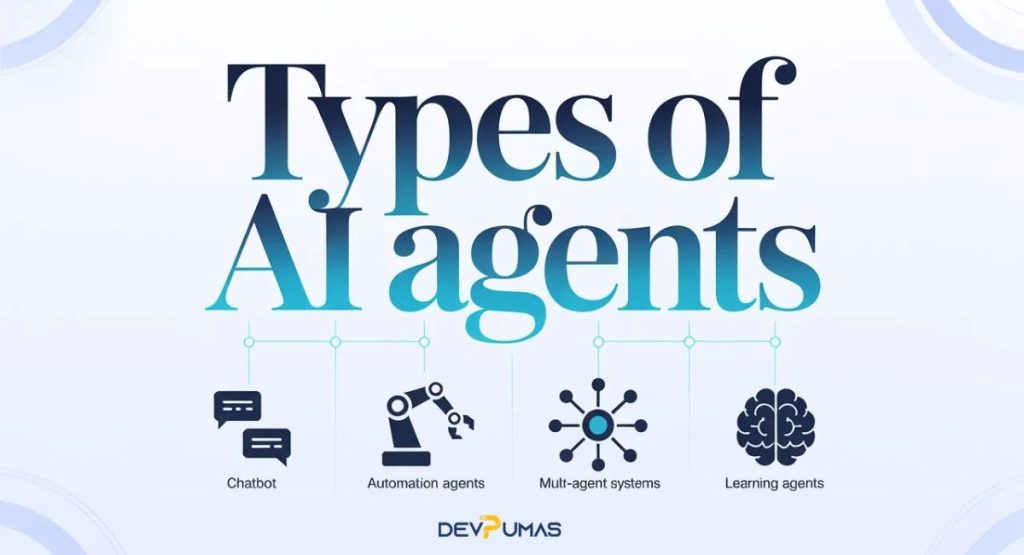
Not all AI systems are the same. Different types of AI customer service agents serve different needs.
Conversational AI handles chat-based interactions. Voice AI manages phone support. Email automation systems process tickets. Hybrid models combine AI with human escalation.
Each type works as an AI virtual assistant for support depending on the business model. For example, startups prefer chat-based tools, while large enterprises use full-scale intelligent customer service agent systems.
These tools act as flexible AI customer service tools that adapt to business size and complexity.
Challenges and Limitations of AI Customer Support Agents
Even powerful systems have limits. AI agents for customer support sometimes struggle with emotional conversations or unclear requests. They may also misinterpret slang or regional language differences.
Another concern is privacy. Businesses must ensure data security when using automated customer support system platforms. Proper compliance is essential in regions like the UK and Canada.
Still, these tools continue to improve. With better training, they are becoming more accurate and reliable every year.
How to Choose the Best AI Agent for Customer Support
Choosing the right system requires careful planning. Businesses should focus on scalability, integration, and accuracy. A strong AI customer support solution should connect with existing CRM and ticketing tools.
It should also support AI support ticket automation and provide analytics for performance tracking. Most importantly, it should align with customer expectations.
Key evaluation areas include:
- Integration with existing systems
- Response accuracy and speed
- Multichannel support capability
- Scalability for future growth
A well-chosen AI-driven support platform can transform customer experience completely.
How DevPumas Help You
DevPumas helps businesses build and implement powerful AI agents for customer support tailored to real needs. The team focuses on creating scalable systems that improve response time and reduce operational stress.
They design custom AI chatbot for customer service solutions and integrate them into existing business workflows. This includes CRM setup, automation design, and AI contact center solutions.
A simple case study shows impact. A small SaaS startup partnered with DevPumas and used a custom AI customer engagement tools setup. Within weeks, they saw faster resolution times and fewer repetitive tickets.
DevPumas turns complex AI systems into simple, usable tools that businesses can rely on every day.
Future of AI Agents in Customer Support
The future of AI agents for customer support looks highly advanced. These systems are moving toward full autonomy. Soon, they will predict customer needs before queries even arrive.
Future systems will deeply enhance customer experience with AI by offering personalized, proactive support. Voice AI will become more natural, and chat systems will feel almost human.
Companies adopting early will gain a strong competitive advantage as AI becomes the standard in global customer service.
FAQs
Q: What are AI agents for customer support?
They are smart AI systems that handle customer queries across chat, email, and voice with fast, accurate responses.
Q: How do AI agents improve customer service?
They reduce response time, automate repetitive tasks, and provide 24/7 support for better customer satisfaction.
Q: Can AI agents replace human support teams?
They handle routine tasks well, but humans are still needed for complex or emotional customer issues.
Q: What businesses use AI customer support agents?
E-commerce, SaaS companies, banks, and tech startups widely use them for scalable customer support.
Q: Are AI customer support agents expensive?
No, they are usually more affordable than hiring large support teams and scale easily with business growth.
Conclusion
AI agents for customer support are reshaping how businesses interact with customers. They bring speed, accuracy, and availability that traditional systems cannot match. From startups to large enterprises, adoption is growing rapidly.
When used correctly, these tools improve customer satisfaction, reduces workload, and creates a smoother experience for both customers and teams. The future of customer service is intelligent, automated, and always available.
