
Artificial intelligence is no longer a distant dream. It is shaping real industries, real jobs, and real lives across the UK, USA, and Canada. The Latest AI Trends in 2026 are not just technical upgrades. They are a full transformation of how humans work with machines, make decisions, and solve problems. From business automation to intelligent assistants, AI is now deeply woven into everyday systems.
What makes this moment special is speed. Innovation is happening faster than ever. Companies are not just using AI tools anymore. They are building entire ecosystems around them. As a result, the Latest AI Trends in 2026 are driving a global shift toward smarter, faster, and more adaptive technology.
Introduction: The Rise of AI in 2026
The world in 2026 feels different because intelligence is now embedded in software itself. The Latest AI Trends in 2026 show that artificial intelligence has moved from experimental labs into daily operations. Businesses in the USA, UK, and Canada are using AI for decision-making, automation, and customer engagement at scale.
One important shift is the speed of adoption. Companies no longer ask if they should use AI. Instead, they ask how fast they can integrate it. This change reflects the power of future of AI technology and the massive AI industry growth 2026 across sectors like healthcare, finance, and retail.
The transformation is also social. People now interact with AI systems through apps, chatbots, and smart devices daily. This has created a new digital lifestyle where AI-driven digital transformation is not optional but essential for survival in competitive markets.
Generative AI Becomes Mainstream
Generative AI is now at the heart of creativity and productivity. One of the most powerful Latest AI Trends in 2026 is the rise of systems that can write, design, and code like humans. This shift is part of the ongoing generative AI evolution that is redefining industries.
Businesses use AI tools to create marketing campaigns, write articles, and even design websites in minutes. This reduces workload and increases output dramatically. The concept of how generative AI works in real life is now visible in tools used by millions every day.
A simple comparison shows the impact:
| Task | Before AI | With Generative AI |
| Content Writing | Hours | Minutes |
| Graphic Design | Days | Seconds |
| Code Creation | Manual | AI-assisted |
Experts say generative systems are becoming the backbone of modern creativity. As a result, next generation AI models are now shaping the future of content, design, and communication.
AI-Powered Automation in Every Industry
Automation is no longer limited to factories. It now runs entire digital ecosystems. The Latest AI Trends in 2026 show strong growth in AI automation tools that handle complex workflows in finance, healthcare, and logistics.
Companies are using automation to reduce human workload and improve accuracy. Tasks like customer support, scheduling, and reporting are now handled by intelligent systems. This is a major part of smart automation solutions and AI transformation in business.
A real-world example is banking. AI now detects fraud in real time by analyzing thousands of transactions per second. This kind of predictive analytics technology helps companies prevent risks before they happen.
The result is clear. Businesses are becoming faster, more accurate, and more efficient than ever before.
AI Agents and Autonomous Systems
AI agents are one of the most exciting developments in 2026. These systems can think, plan, and act without constant human input. The Latest AI Trends in 2026 highlight how autonomous systems are changing productivity forever.
For example, AI assistants can now manage emails, schedule meetings, and even run marketing campaigns. This is a clear sign of intelligent systems development becoming mainstream.
Case Study: A UK-based startup reduced operational costs by 40% using AI agents to automate customer support and reporting tasks. This shows how powerful these systems have become.
This evolution raises an important question: is AI replacing jobs in 2026? The answer is complex. While some tasks are automated, new roles in AI management and development are emerging.
Multimodal AI Models (Text, Image, Voice, Video)
Multimodal AI is changing how humans interact with machines. The Latest AI Trends in 2026 show systems that understand multiple formats at once. This includes text, images, audio, and video.
This innovation is part of deep learning innovations that allow AI to interpret complex data together. For example, a user can upload an image, speak a question, and receive a detailed answer instantly.
This advancement is making AI-powered applications more natural and human-like. The education, healthcare, and entertainment industries are seeing massive improvements.
A simple example:
- A student uploads a diagram
- Speaks a question
- AI explains the concept instantly
This is how AI is changing the world in 2026 in real-time interactions.
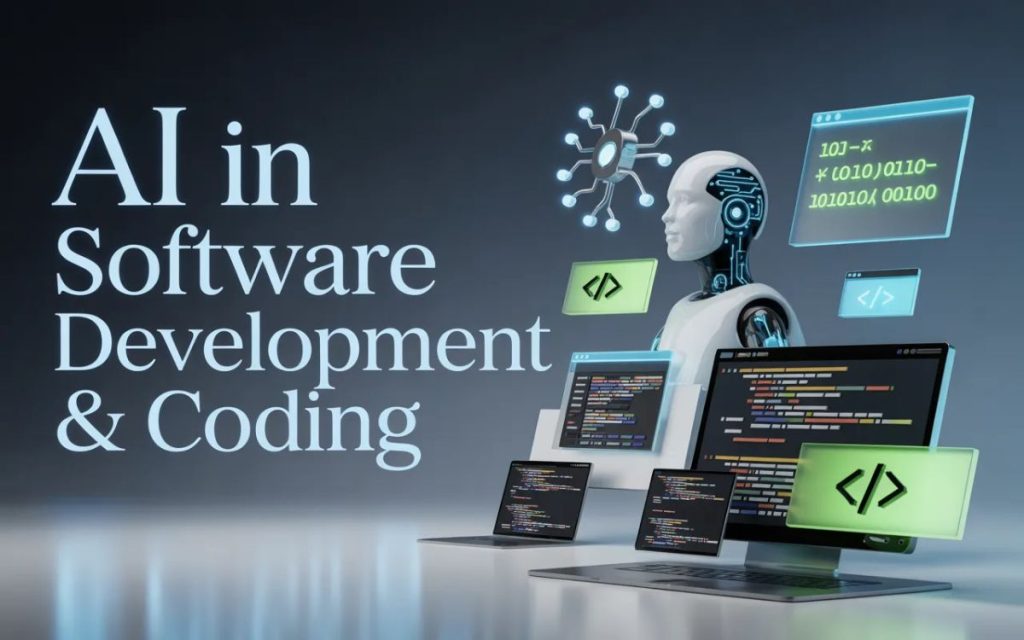
AI in Software Development & Coding
Software development has changed dramatically. One of the strongest Latest AI Trends in 2026 is the rise of AI-assisted coding tools.
Developers now use AI to generate code, detect bugs, and optimize performance. This is a major shift in AI in software development and productivity improvement.
Many companies in the USA and Canada report faster development cycles because of these tools. Developers no longer start from scratch. Instead, they refine AI-generated code.
This leads to faster product launches and better software quality. It also highlights the latest AI tools for developers that are shaping modern engineering workflows.
Rise of Edge AI and Real-Time Processing
Edge AI is becoming a game-changer in 2026. Instead of sending data to the cloud, systems now process it locally. This is one of the most important Latest AI Trends in 2026.
This approach improves speed and privacy. Smart devices, cars, and IoT systems now make decisions instantly.
For example, self-driving cars rely on Edge AI to react in milliseconds. This reduces accidents and improves safety.
This evolution supports machine learning advancements and makes systems more efficient in real-world environments.
Ethical AI and Regulations in 2026
As AI grows, responsibility becomes critical. Governments in the UK, USA, and Canada are building strict rules around AI usage. The Latest AI Trends in 2026 emphasize fairness, transparency, and safety.
Ethical AI ensures systems do not create bias or misuse data. This is essential for trust in digital systems.
Key focus areas include:
- Data privacy protection
- Algorithm transparency
- Bias reduction
- User consent
This reflects the importance of what is the future of machine learning in a responsible world.
AI in Business Decision Making
Businesses are now fully data-driven. One of the most impactful Latest AI Trends in 2026 is AI-powered decision-making systems.
Companies use AI to analyze trends, predict customer behavior, and improve strategies. This is part of AI-driven digital transformation.
For example, retail companies adjust prices dynamically based on demand patterns. This improves profit margins and customer satisfaction.
This shows how businesses use AI in 2026 to stay competitive in global markets.
Future of AI: What Comes After 2026?
The future is even more advanced. The Latest AI Trends in 2026 suggest we are moving toward systems that can think more independently.
Experts predict stronger collaboration between humans and machines. This includes advanced emerging AI technologies to watch such as early AGI systems.
A future comparison:
| Era | AI Capability |
| 2020 | Basic automation |
| 2026 | Intelligent systems |
| Future | Human-like reasoning |
This evolution explains AI trends that will dominate the future and reshape global industries.
How DevPumas Helps You Leverage Latest AI Trends in 2026
In today’s fast-moving digital world, staying aligned with the Latest AI Trends in 2026 is not easy without expert guidance. This is where DevPumas steps in with practical, real-world AI and software solutions designed for businesses in the UK, USA, and Canada. Instead of just following trends, DevPumas helps you actively implement them into your products, workflows, and business systems.
DevPumas focuses on building intelligent systems that combine AI-driven digital transformation, automation, and modern web technologies. Whether you need AI-powered applications, smart automation solutions, or scalable web platforms, the goal is simple,turn complex AI concepts into usable business value. By using advanced AI automation tools and modern frameworks, DevPumas helps companies improve productivity, reduce costs, and stay competitive in a rapidly evolving market shaped by the future of AI technology.
FAQs
1. What are the Latest AI Trends in 2026?
The Latest AI Trends in 2026 include generative AI, automation, AI agents, multimodal systems, and Edge AI transforming industries globally.
2. How is AI changing the world in 2026?
How AI is changing the world in 2026 is clear through automation, smarter decision-making, and faster digital transformation in every sector.
3. What is the future of artificial intelligence explained simply?
The future of artificial intelligence explained simply is a world where AI assists humans in work, creativity, and decision-making daily.
4. Is AI replacing jobs in 2026?
Is AI replacing jobs in 2026 is a common concern. AI automates tasks but also creates new roles in development, data, and AI management.
5. How do businesses use AI in 2026?
How businesses use AI in 2026 includes automation, predictive analytics, customer support systems, and improving productivity using smart tools.
Conclusion
The Latest AI Trends in 2026 clearly show a world driven by intelligence, automation, and innovation. From healthcare to software development, AI is transforming every industry.
The most important insight is simple: AI is not replacing humans, but reshaping how humans work. Understanding this shift is key for businesses and individuals across the UK, USA, and Canada.
The future of artificial intelligence explained is not just about machines. It is about collaboration, creativity, and smarter living.
