
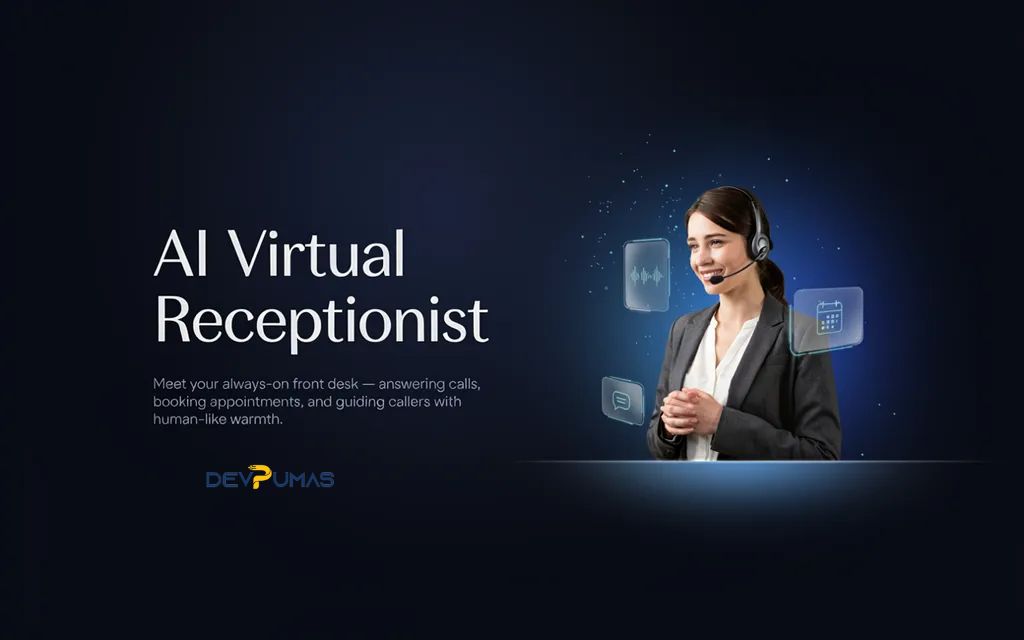
Introduction
Have you ever missed an important customer call because you were busy, away from your desk, or helping someone else? It can be frustrating to lose potential business simply because you can’t answer every call on time. That’s why many business owners are starting to look into an AI Virtual Receptionist as a smarter way to stay connected.
In this guide, you’ll learn how an AI Virtual Receptionist works, what benefits it offers, and whether it’s the right fit for your business. We’ll break everything down in simple terms so you can understand how this technology helps improve customer service, save time, and capture more opportunities.
What Is an AI Virtual Receptionist?
An AI Virtual Receptionist is a smart communication system that answers calls, responds to customer questions, routes inquiries, and handles routine administrative tasks without human intervention. Unlike a traditional receptionist, it uses voice recognition technology, machine learning, and conversational AI to interact naturally with callers.
Think of it as a digital receptionist that never takes breaks and remains available around the clock. Modern AI virtual receptionist software can understand customer requests, transfer calls to the right department, schedule appointments, and even capture lead information automatically.
How an AI Virtual Receptionist Reduces Business Costs
Businesses constantly look for ways to improve operational efficiency without sacrificing customer experience. An AI Virtual Receptionist helps achieve both goals by automating repetitive communication tasks and reducing dependence on manual labor.
Instead of expanding front-desk teams as call volumes increase, companies can use business automation solutions to manage customer interactions more efficiently. The result is lower operating costs and better resource allocation.
Lower Staffing Expenses
Hiring full-time receptionists involves salaries, benefits, training, and overhead expenses. For many small businesses, these costs can add up quickly. An AI receptionist handles routine calls at a fraction of the cost.
Companies can redirect resources toward growth initiatives rather than administrative functions. This approach is particularly valuable for startups and growing businesses with limited budgets.
Minimized Missed Calls and Lost Leads
Every unanswered call could represent a lost customer. An automated phone answering service ensures that callers always receive a response, even during weekends, holidays, or after business hours.
Lead capture automation records contact details and customer inquiries instantly. This helps businesses follow up promptly and reduces the chances of losing valuable opportunities.
Increased Operational Efficiency
Many businesses spend hours handling repetitive phone inquiries. An automated receptionist can answer common questions, provide business information, and manage inbound call management automatically.
Employees can focus on higher-value activities while routine communications run in the background. This creates smoother workflows and improves overall business productivity.
How an AI Virtual Receptionist Saves Time
Time is one of the most valuable resources for any organization. By automating communication processes, businesses can serve customers faster while reducing administrative burdens.
Whether you’re managing a healthcare clinic, law firm, or service-based company, automation allows your team to focus on meaningful work instead of repetitive tasks.
Instant Response to Customer Inquiries
Customers don’t like waiting on hold. An AI customer service system responds immediately and provides answers to common questions without delay.
This faster response time improves customer satisfaction and creates a better first impression. In many cases, callers receive the information they need within seconds.
Automated Administrative Tasks
Administrative work often consumes hours each week. Tasks like appointment booking, reminders, and follow-ups can be handled through appointment scheduling software and customer support automation.
By automating these processes, businesses reduce manual workload and improve accuracy. Staff members can spend more time helping customers and less time managing paperwork.
Streamlined Call Management
A major advantage of an AI phone receptionist is intelligent call routing. Instead of transferring callers multiple times, the system identifies needs and directs them appropriately.
Call routing automation improves service optimization and ensures customers reach the right person quickly. This reduces frustration and shortens resolution times.
Key Features of an AI Virtual Receptionist
Modern AI answering service platforms offer much more than simple call answering. They function as complete AI communication platforms designed to improve customer engagement and business scalability.
Key features often include:
- 24/7 call answering
- Intelligent call routing
- Automated scheduling
- CRM integration
- Lead management
- Multilingual support
- Voice AI technology
- Customer inquiry automation
- Real-time reporting
- Omnichannel communication
These capabilities help businesses deliver consistent service while maintaining efficiency across multiple communication channels.
A smart receptionist software solution can also learn from interactions over time. As the system gathers data, it becomes more effective at handling customer requests and improving service quality.
Industries Benefiting from AI Virtual Receptionists
Nearly every industry that handles customer calls can benefit from a virtual receptionist service. However, some sectors experience particularly strong results.
Healthcare providers use AI receptionists to schedule appointments, answer patient questions, and reduce administrative burdens. Legal firms rely on automated call management to screen inquiries and manage consultations.
Real estate agencies use virtual call handling tools to capture leads and respond to property inquiries quickly. Small businesses benefit from professional call handling without the expense of hiring a full-time receptionist.
E-commerce companies also use AI business assistants to support customer communication and improve customer retention. These tools ensure customers receive timely assistance throughout their buying journey.
AI Virtual Receptionist vs Human Receptionist
Many business owners wonder whether an AI Virtual Receptionist can replace a human receptionist. The answer depends on business needs, but both options offer distinct advantages.
A human receptionist provides emotional understanding and personal interaction. However, AI-powered receptionist systems deliver consistency, scalability, and around-the-clock availability.
| Feature | AI Virtual Receptionist | Human Receptionist |
| Availability | 24/7 | Business hours |
| Cost | Lower | Higher |
| Scalability | High | Limited |
| Response Speed | Instant | Variable |
| Appointment Scheduling | Automated | Manual |
| Call Volume Handling | Unlimited | Limited |
| Human Empathy | Limited | Strong |
Many organizations achieve the best results through a hybrid approach that combines human expertise with AI-driven operations.
Common Challenges and How to Overcome Them
Like any technology, implementation can present challenges. Some customers may initially prefer speaking with a person rather than a virtual customer service agent.
Clear communication helps address this concern. Businesses should explain how automation improves service speed while still providing access to human support when needed.
Integration can also seem complex at first. Choosing an AI customer communication platform that supports CRM integration and existing systems simplifies deployment significantly.
Regular monitoring and optimization ensure the solution continues meeting customer expectations. Reviewing call data and customer feedback can reveal opportunities for improvement.
Why Businesses Choose DevPumas for AI Virtual Receptionist Solutions
Businesses need more than technology; they need solutions tailored to their goals. DevPumas focuses on delivering practical AI-powered business communication systems that improve efficiency and customer experience.
The company helps organizations implement customized workflows, intelligent call routing systems, and automated front desk assistant solutions that fit their unique requirements.
Whether you’re seeking affordable AI virtual receptionist solutions or advanced enterprise automation capabilities, DevPumas provides scalable support designed for long-term growth.
Their focus on workflow automation, customer experience management, and service optimization allows businesses to modernize communications without disrupting daily operations.
Best Practices for Implementing an AI Virtual Receptionist
Successful implementation starts with clear objectives. Determine which communication challenges you want to solve before configuring your system.
Define call flows, customer journeys, and escalation paths. This ensures callers receive the right experience from the start.
Next, connect the platform with existing business tools. CRM integration allows customer information to flow seamlessly across systems, creating a more personalized experience.
Regularly review performance metrics, call recordings, and customer feedback. Continuous refinement helps maximize the benefits of your AI call answering service while maintaining high service standards.
Training team members is equally important. Employees should understand how automation supports their work and how to intervene when human assistance is required.
Future of AI Virtual Receptionists
The future of the AI Virtual Receptionist looks incredibly promising. Advances in natural language processing receptionist technology will make conversations feel even more human and intuitive.
Future systems will likely provide predictive support by anticipating customer needs before they’re expressed. Enhanced voice recognition technology will improve accuracy and reduce misunderstandings.
As digital transformation accelerates, businesses will increasingly adopt conversational AI assistants and smart customer support solutions. These systems will become central to customer experience management and business process automation with AI.
Organizations that embrace these innovations early will gain advantages in customer satisfaction, operational efficiency, and long-term business scalability.
FAQs
What is an AI Virtual Receptionist?
An AI Virtual Receptionist is software that answers calls, handles customer inquiries, routes calls, and automates communication tasks using artificial intelligence.
How does an AI Virtual Receptionist work?
It uses voice AI, natural language processing, and automation to understand caller requests and provide appropriate responses or actions.
Can an AI Virtual Receptionist schedule appointments?
Yes. Most platforms include automated scheduling features that book, modify, and confirm appointments without manual assistance.
Is an AI Virtual Receptionist suitable for small businesses?
Absolutely. Small businesses often benefit the most because they gain professional call handling without hiring additional staff.
How much does an AI Virtual Receptionist cost?
Costs vary depending on features and call volume, but they are typically much lower than employing a full-time receptionist.
Conclusion
An AI Virtual Receptionist helps businesses reduce costs, save time, and deliver better customer experiences. From automated call handling and appointment scheduling to lead capture and customer support, these solutions streamline daily operations while improving efficiency.
As AI technology continues to evolve, businesses that adopt intelligent communication tools will be better positioned for growth. If you’re looking for a practical way to modernize customer interactions, DevPumas can help you implement a solution that supports your goals and keeps your business available around the clock.
