
Introduction
Have you ever wondered how some AI tools seem to make decisions, complete tasks, and adapt without constant human input? As technology moves faster than ever, many people are curious about how these systems work and whether they could change the way we live and work. That growing interest is exactly why Autonomous AI Systems have become such a hot topic.
In this guide, you’ll learn what Autonomous AI Systems are, how they operate, and why they are becoming increasingly important across industries. Whether you’re new to the concept or looking for a deeper understanding, this article will break everything down in a simple, practical way that’s easy to follow.
What Are Autonomous AI Systems?
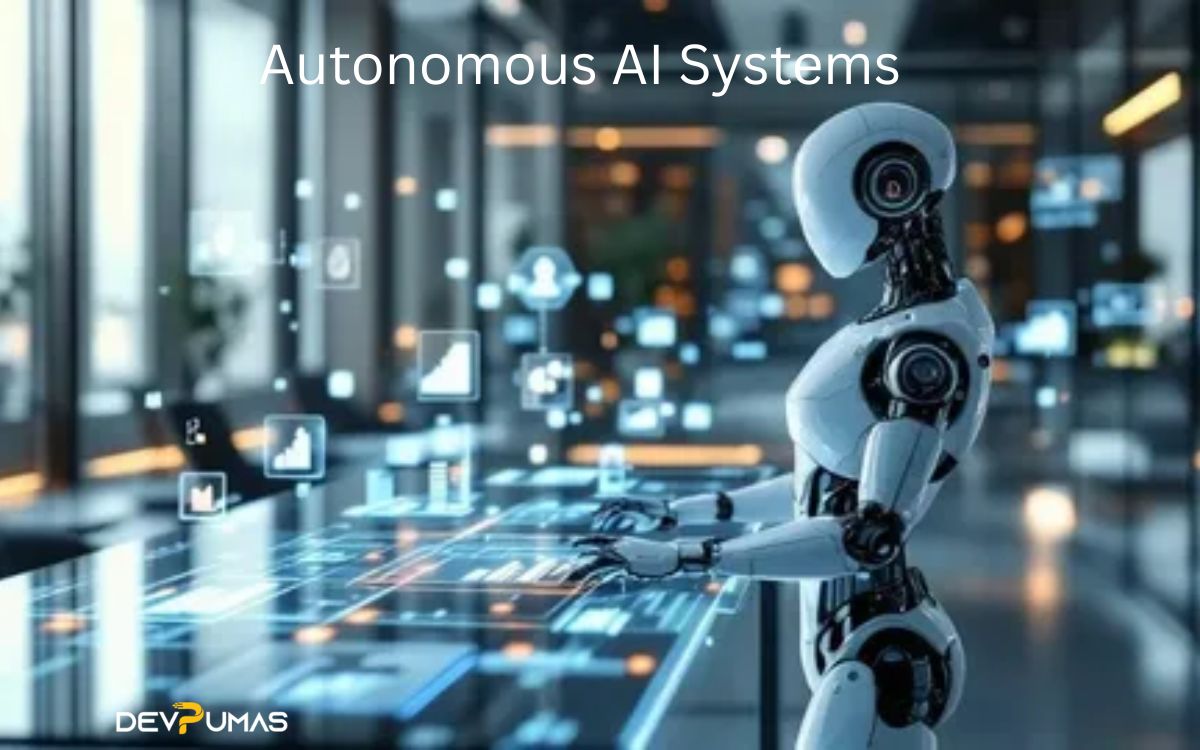
Autonomous AI Systems are advanced forms of autonomous artificial intelligence that can perform tasks, make decisions, learn from data, and adapt to changing situations with minimal human intervention. Unlike traditional software that follows fixed instructions, these systems analyze information, identify patterns, and take action based on their goals and environment.
Think of them as digital workers rather than simple tools. A traditional application waits for commands, but an autonomous system can independently monitor processes, solve problems, and optimize outcomes. This ability makes them valuable for organizations seeking intelligent automation and AI-driven operations at scale.
How Autonomous AI Works
At their core, autonomous AI systems combine machine learning algorithms, large language models, predictive analytics, and decision intelligence. They continuously gather data, process information, evaluate options, and execute actions based on predefined objectives.
For example, an AI-powered customer support platform can analyze incoming messages, determine customer intent, generate responses, escalate complex cases when necessary, and improve future interactions through self-learning AI capabilities. The system becomes more effective over time because it learns from experience rather than relying solely on static programming.
Core Components of an Autonomous AI System
Several technologies work together to create autonomous computing capabilities. These components allow systems to operate independently while maintaining accuracy and efficiency.
Key components include:
- Machine learning models
- Neural networks
- Decision engines
- Data processing systems
- AI orchestration platforms
- Knowledge databases
- Monitoring and feedback loops
- Automation workflows
When combined, these technologies create autonomous workflows that can manage tasks from start to finish without requiring constant oversight.
How Autonomous AI Systems Differ From Traditional AI
Many people assume all AI technologies work the same way. In reality, there’s a significant difference between traditional AI solutions and modern Autonomous AI Systems.
Traditional AI focuses on completing specific tasks within defined boundaries. Autonomous systems go much further by making decisions, adapting strategies, and managing entire processes independently. This shift represents a major step forward in enterprise AI automation and intelligent business automation.
| Feature | Traditional AI | Autonomous AI |
| Human Input | High | Low |
| Decision Making | Rule-Based | Dynamic |
| Learning Ability | Limited | Continuous |
| Adaptability | Moderate | High |
| Automation Level | Partial | End-to-End |
Rule-Based AI vs Autonomous AI
Rule-based AI follows predefined instructions created by developers. If a situation falls outside those rules, the system often struggles to respond effectively. This approach works well for repetitive tasks but lacks flexibility.
Autonomous AI uses machine intelligence and autonomous machine learning to evaluate situations in real time. Instead of relying only on fixed rules, it can analyze new information, adjust behavior, and make informed decisions. This flexibility allows businesses to automate more complex operations than ever before.
Human-in-the-Loop vs Fully Autonomous Operations
Many traditional AI solutions depend heavily on human approval before taking action. These human-in-the-loop systems provide recommendations but leave final decisions to employees.
Fully autonomous operations reduce that dependency. Modern autonomous decision-making systems can evaluate risks, execute actions, and monitor results independently. Humans still establish goals and governance policies, but the day-to-day execution becomes largely automated.
Key Advantages of Autonomous Decision-Making
One of the biggest strengths of autonomous technology is its ability to react quickly. Human teams may need hours to analyze information and choose a course of action. An AI system can often perform the same process within seconds.
Other advantages include:
- Faster decision cycles
- Reduced operational costs
- Improved consistency
- Greater scalability
- Enhanced workflow intelligence
- Increased AI-powered productivity
These benefits explain why businesses are investing heavily in next-generation AI solutions.
Key Features of Autonomous AI Systems
Several characteristics separate Autonomous AI Systems from conventional automation software. These features allow them to function as intelligent, adaptive systems rather than simple task executors.
Some of the most important features include:
- Autonomous decision making
- Continuous learning
- Goal-oriented behavior
- Real-time adaptation
- Cognitive automation
- Self-operating systems
- AI task automation
- Advanced analytics
- Autonomous software management
- End-to-end process execution
Another defining feature is collaboration. Many modern systems support human-AI collaboration, enabling employees and AI to work together effectively. Instead of replacing people entirely, AI often handles repetitive work while humans focus on strategy, creativity, and relationship-building.
Organizations also benefit from AI workflow automation that spans multiple departments. For example, an autonomous platform can process customer orders, update inventory, generate invoices, and notify shipping providers without human involvement.
Types of Autonomous AI Systems
The field of autonomous AI technology includes several categories, each designed to solve different challenges. Understanding these types helps organizations choose the right solution for their needs.
Some systems specialize in business automation, while others focus on robotics, transportation, or intelligent decision-making. Together, these categories form the foundation of today’s rapidly expanding autonomous enterprise solutions market.
Autonomous Agents
Autonomous agents are software entities that pursue goals independently. They can gather information, analyze data, make decisions, and execute actions without continuous supervision.
For instance, an autonomous AI agent might manage marketing campaigns, monitor cybersecurity threats, or optimize inventory levels. These autonomous agents are becoming increasingly popular because they can complete complex tasks while reducing manual effort.
Multi-Agent AI Systems
Multi-agent systems involve multiple autonomous agents working together to achieve shared objectives. Each agent handles specific responsibilities while communicating with others to coordinate activities.
Imagine a supply chain network where different AI agents manage inventory, logistics, forecasting, and customer communication. By collaborating, they create a highly efficient digital workforce automation environment capable of responding quickly to changing conditions.
Autonomous Robotics
Autonomous robotics combines AI with physical machines capable of interacting with the real world. These systems use sensors, machine learning, and smart robotics technologies to navigate environments and perform tasks independently.
Manufacturing facilities increasingly rely on autonomous robotics for assembly, quality control, and material handling. As technology improves, these systems continue expanding into healthcare, agriculture, and logistics industries.
AI-Powered Business Automation Platforms
Many organizations adopt AI-powered automation platforms to streamline operations. These solutions integrate AI workflow automation, business process automation, and enterprise software automation into a single environment.
Examples include platforms that automate customer support, document processing, financial reporting, and human resources functions. These systems help companies reduce costs while improving accuracy and efficiency.
Self-Driving Vehicles
Self-driving vehicles are among the most recognizable examples of autonomous AI applications. These vehicles rely on sensors, computer vision, predictive analytics, and autonomous decision making to navigate roads safely.
Autonomous vehicles continuously analyze traffic conditions, identify obstacles, and determine the safest route. While widespread adoption is still evolving, significant advancements continue to push this technology forward.
The development of self-driving vehicles also contributes to broader innovations in agentic AI, reinforcement learning, and autonomous computing. Lessons learned in transportation often influence advancements across many other industries.
Top Use Cases of Autonomous AI Systems in 2026
As AI technology becomes more sophisticated, organizations are finding new ways to apply Autonomous AI Systems across their operations. These solutions are no longer limited to experimental projects. They are now driving measurable results in customer service, healthcare, finance, cybersecurity, manufacturing, and many other industries.
The biggest advantage is their ability to work continuously without constant supervision. Businesses can automate complex workflows, reduce manual effort, and improve decision-making while maintaining high levels of efficiency. This makes autonomous AI use cases increasingly valuable for organizations seeking long-term growth.
Customer Service Automation
Customer service has become one of the fastest-growing areas for autonomous AI systems for customer service. Modern platforms can answer questions, resolve common issues, process requests, and even handle multi-step conversations without human intervention.
Unlike traditional chatbots, today’s AI-powered automation tools understand context and learn from interactions. They can analyze customer intent, access relevant information, and provide personalized responses. This creates faster support experiences while allowing human agents to focus on more complex cases.
Healthcare Diagnostics and Monitoring
The healthcare sector is embracing autonomous AI in healthcare to improve patient outcomes and reduce administrative workloads. Advanced AI systems can monitor patient data, identify abnormalities, and assist healthcare professionals with diagnostic recommendations.
For example, intelligent autonomous systems can analyze medical images, track vital signs, and detect early warning signs of health issues. While human oversight remains essential, these tools help medical teams make faster and more informed decisions.
Financial Analysis and Trading
Financial institutions use autonomous AI in finance to process massive amounts of data and identify opportunities in real time. These systems can evaluate market trends, assess risks, and execute trading strategies based on predefined goals.
Many organizations also rely on autonomous AI systems in financial services for fraud detection, compliance monitoring, and investment management. Because markets move quickly, AI-driven operations provide a significant advantage by reacting faster than human analysts alone.
Benefits of Autonomous AI Systems
The growing popularity of Autonomous AI Systems comes from their ability to deliver meaningful business value. Companies that successfully implement these technologies often see improvements in productivity, efficiency, and scalability.
Whether the goal is reducing costs or accelerating innovation, autonomous systems provide organizations with tools that can adapt and improve over time. As a result, autonomous AI benefits for businesses continue to attract attention across industries.
Some of the most important benefits include:
- Increased operational efficiency
- Faster decision-making
- Reduced labor costs
- Improved scalability
- Better accuracy
- Continuous learning capabilities
- Enhanced customer experiences
- Greater AI-powered productivity
- Stronger business agility
Another major advantage is consistency. Human performance can vary depending on workload, fatigue, or experience. Autonomous systems execute tasks according to defined objectives and continuously optimize their performance through learning.
Organizations also benefit from intelligent automation that operates around the clock. Unlike traditional teams, AI systems don’t require breaks, vacations, or shift changes. This capability supports global operations and helps businesses respond to customer needs more effectively.
Challenges and Risks of Autonomous AI Systems
Although the benefits are impressive, organizations must also understand the challenges of autonomous AI adoption. Implementing advanced AI technologies requires careful planning, governance, and oversight.
Businesses that rush deployment without considering risks may encounter issues related to security, compliance, ethics, or operational reliability. A balanced approach helps organizations maximize value while minimizing potential problems.
Common challenges include:
- Data quality issues
- Algorithm bias
- Security vulnerabilities
- Regulatory compliance concerns
- Integration complexity
- Workforce adaptation challenges
- Lack of transparency
- High implementation costs
- Dependence on quality training data
One of the biggest concerns involves autonomous AI risks related to decision-making. If a system learns from biased or incomplete information, its recommendations may produce undesirable outcomes. This is why AI governance and AI ethics have become critical topics in modern AI development.
Organizations must also establish clear accountability frameworks. Even when systems operate independently, humans remain responsible for defining objectives, monitoring performance, and ensuring compliance with legal and ethical standards.
Autonomous AI Systems vs AI Agents
Many people use the terms interchangeably, but there are important differences between Autonomous AI Systems and AI agents. Understanding these distinctions helps businesses choose the most appropriate solution for their goals.
An AI agent typically focuses on completing a specific task or set of tasks. An autonomous system often combines multiple agents, decision engines, learning models, and automation workflows into a broader operational framework.
| Feature | Autonomous AI Systems | AI Agents |
| Scope | Enterprise-wide | Task-specific |
| Complexity | High | Moderate |
| Decision-Making | Multi-layered | Goal-focused |
| Integration | Extensive | Limited to assigned tasks |
| Scalability | Large-scale operations | Individual functions |
AI agents can be viewed as building blocks within larger autonomous environments. A business may deploy several specialized agents that work together as part of a comprehensive enterprise autonomous AI solution.
As organizations pursue autonomous AI systems for business automation, they often combine multiple agents with workflow intelligence and decision intelligence capabilities to create fully integrated automation ecosystems.
Which Solution Is Better for Businesses?
The answer depends on the organization’s objectives. Businesses seeking to automate a single process may find AI agents sufficient. These solutions are generally easier to implement and require fewer resources.
However, companies aiming to transform entire operations often benefit more from Autonomous AI Systems. These platforms coordinate multiple functions, automate end-to-end workflows, and support enterprise-wide optimization. For large organizations, this broader approach typically delivers greater long-term value.
A practical strategy is to start with individual AI agents and gradually expand into a larger autonomous ecosystem. This approach allows organizations to gain experience, demonstrate value, and build confidence before scaling their AI initiatives.
Ultimately, both technologies play important roles in the future of autonomous AI. The key is selecting the solution that aligns with business goals, available resources, and operational complexity.
Best Autonomous AI Systems and Platforms in 2026
The market for autonomous AI platforms has expanded rapidly over the past few years. Businesses now have access to a wide range of tools designed to automate workflows, support decision-making, and improve operational efficiency.
Choosing the best autonomous AI systems in 2026 depends on factors such as scalability, integration capabilities, security requirements, and business objectives. Some platforms focus on autonomous agents, while others provide complete enterprise AI automation solutions.
OpenAI-Based Autonomous Agents
OpenAI-powered solutions have become a major force in autonomous AI technology. These systems use advanced large language models to understand instructions, generate content, analyze information, and complete complex workflows.
Many businesses use OpenAI-based autonomous agents for customer support, research, content creation, workflow management, and AI-powered autonomous operations. Their flexibility makes them suitable for both small businesses and large enterprises.
AutoGPT
AutoGPT is one of the most well-known autonomous AI tools available today. It allows AI systems to break large goals into smaller tasks and execute them with minimal human guidance.
Organizations use AutoGPT for research, automation projects, data collection, and process optimization. Its ability to plan and adapt makes it a popular example of agentic AI in action.
AgentGPT
AgentGPT provides a user-friendly way to create autonomous AI agents through a web-based interface. Users can assign goals and allow agents to work independently toward achieving them.
This platform appeals to businesses that want autonomous AI software without extensive technical development. It demonstrates how autonomous AI applications are becoming more accessible to organizations of all sizes.
CrewAI
CrewAI focuses on multi-agent systems that collaborate to complete complex objectives. Instead of relying on a single agent, multiple specialized agents work together while sharing information and responsibilities.
This approach improves efficiency and allows organizations to create sophisticated autonomous workflows. CrewAI is especially useful for businesses managing large projects that require coordination across multiple functions.
Microsoft AI Solutions
Microsoft continues expanding its AI ecosystem through AI copilots, enterprise automation tools, and cloud-based AI services. These solutions support intelligent business automation across departments such as finance, customer service, human resources, and operations.
Many enterprises choose Microsoft’s AI automation solutions because they integrate easily with existing business systems. This simplifies deployment while supporting long-term scalability.
Enterprise Automation Platforms
Several enterprise autonomous AI platforms combine robotic process automation, workflow intelligence, cognitive computing, and machine learning into unified environments.
These platforms help organizations automate document processing, customer communications, compliance monitoring, reporting, and countless other tasks. As AI capabilities improve, enterprise automation platforms will play an increasingly important role in digital transformation strategies.
How Businesses Can Implement Autonomous AI Systems
Successful autonomous AI implementation requires more than simply purchasing software. Organizations need a clear strategy, quality data, and realistic goals to achieve meaningful results.
Many companies begin with smaller projects before expanding into larger autonomous enterprise solutions. This phased approach reduces risk and helps teams develop the skills needed to manage advanced AI technologies effectively.
A practical implementation roadmap includes:
- Identify high-value business processes.
- Define measurable objectives.
- Assess data quality and availability.
- Select appropriate autonomous AI software solutions.
- Develop governance and compliance policies.
- Launch pilot programs.
- Monitor performance continuously.
- Scale successful initiatives.
Employee involvement is also important. Human-AI collaboration often produces better outcomes than fully isolated deployments. When employees understand how AI supports their work, adoption tends to increase significantly.
Organizations should also invest in AI governance frameworks to ensure responsible use. Strong oversight helps address security concerns, ethical issues, and regulatory requirements while maintaining trust among stakeholders.
The Future of Autonomous AI Systems
The future of autonomous AI is one of the most exciting topics in technology today. As machine intelligence becomes more advanced, autonomous systems will continue expanding into new industries and use cases.
Future trends in Autonomous AI Systems will likely include deeper integration with enterprise software, improved decision intelligence, stronger reasoning capabilities, and enhanced collaboration between humans and AI. These advancements will allow organizations to automate increasingly complex processes.
Several autonomous AI trends 2026 are already shaping the market:
- Growth of agentic AI ecosystems
- Expansion of autonomous enterprise solutions
- Increased use of multi-agent systems
- More advanced AI orchestration platforms
- Stronger AI governance frameworks
- Greater focus on AI ethics
- Enhanced autonomous machine learning
- Broader adoption of smart automation systems
Researchers are also exploring technologies that move closer to artificial general intelligence (AGI). While true AGI remains a long-term goal, current innovations continue pushing the boundaries of what autonomous technology can achieve.
Businesses that begin investing today will be better positioned to benefit from future developments. Early adoption often creates competitive advantages that become difficult for competitors to match later.
How DevPumas Helps Businesses Build Autonomous AI Systems
Building effective Autonomous AI Systems requires the right combination of strategy, technology, and implementation expertise. Many organizations understand the potential of AI but struggle to transform ideas into practical solutions.
DevPumas helps businesses design, develop, and deploy autonomous AI solutions tailored to their specific goals. Whether the objective is customer service automation, workflow optimization, enterprise AI automation, or intelligent decision-making, the focus remains on delivering measurable business outcomes.
By combining advanced AI systems, machine learning algorithms, workflow intelligence, and automation technologies, DevPumas helps organizations create scalable solutions that improve productivity and operational efficiency.
Services can include:
- AI strategy consulting
- Autonomous workflow design
- AI-powered automation development
- Enterprise AI integration
- Process optimization
- AI governance planning
- Performance monitoring
- Ongoing support and improvement
As autonomous AI technology evolves, businesses need trusted partners who can help navigate complexity and accelerate successful adoption.
FAQs
What are autonomous AI systems?
Autonomous AI systems are advanced AI solutions that can make decisions, perform tasks, learn from data, and adapt to changing situations with minimal human intervention.
How do autonomous AI systems work?
They combine machine learning, data analysis, decision engines, and automation technologies to evaluate information, make decisions, and execute actions independently.
What industries use autonomous AI systems?
Industries such as healthcare, finance, manufacturing, cybersecurity, logistics, retail, and customer service increasingly use autonomous AI systems.
Are autonomous AI systems different from AI agents?
Yes. AI agents typically focus on specific tasks, while autonomous AI systems often coordinate multiple agents and technologies across broader business operations.
What is the future of autonomous AI systems?
The future includes more advanced automation, stronger decision-making capabilities, wider enterprise adoption, and increased collaboration between humans and AI.
Conclusion
The rise of Autonomous AI Systems marks a significant shift in how businesses approach automation, decision-making, and operational efficiency. These technologies go beyond traditional AI by learning, adapting, and executing complex tasks with minimal human involvement. From customer service and healthcare to finance and enterprise operations, their impact is already transforming industries worldwide.
As autonomous AI technology continues to evolve, organizations that embrace innovation today will be better prepared for tomorrow’s opportunities. By understanding the benefits, risks, implementation strategies, and emerging trends, businesses can confidently leverage Autonomous AI Systems to drive growth, improve productivity, and remain competitive in an increasingly AI-powered world.
