Technology Trends

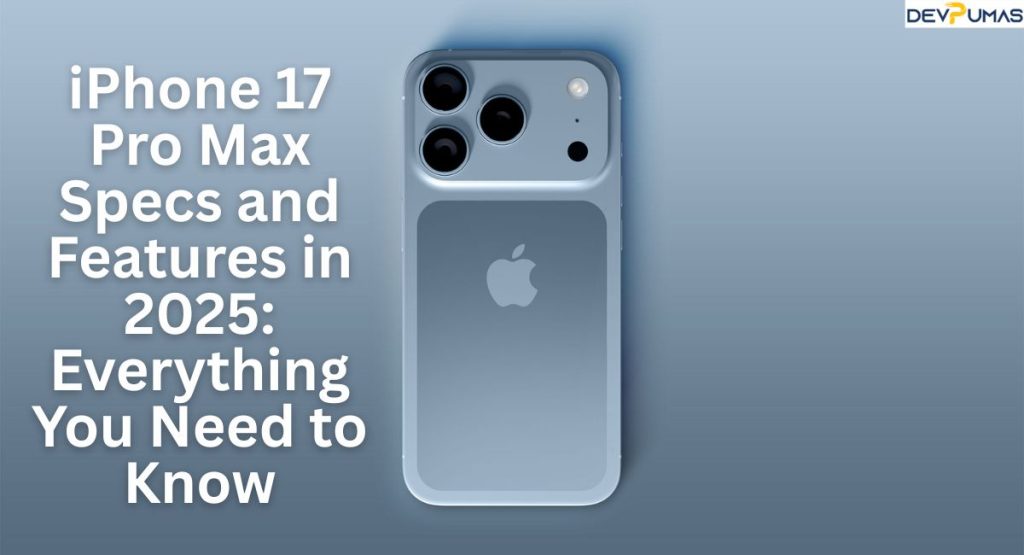
iPhone 17 Pro Max Specs and Features in 2025: Everything You Need to Know

iPhone 17 Pro Max Specs and Features in 2025: Everything You Need to Know

Introduction to iPhone 17 Pro Max specs and features in 2025 The iPhone 17 Pro Max specs and features in 2025 are already creating buzz in the tech world. Apple has once again pushed the boundaries of innovation, blending futuristic design with next-level performance. UK consumers are especially curious about its launch, pricing, and upgrades compared to previous models. With whispers about AI-driven call routing, voice AI receptionist tools, and customer engagement automation, the iPhone 17 Pro Max is shaping up to be more than just a smartphone. It promises to be a complete digital ecosystem that connects work, entertainment, and lifestyle in one seamless device. The anticipation also comes from Apple’s strong focus on data privacy and security AI alongside cloud-based phone systems, ensuring users not only get a premium device but also a trustworthy companion for daily communication. For those wondering whether it is worth upgrading, exploring every detail of its hardware and software will reveal why this release is one of the most important smartphone launches of 2025. The iPhone 17 Pro Max was announced on September 9, 2025, and it became available starting September 19, 2025. In this article we will discuss the iPhone 17 Pro Max specs and features in 2025. iPhone 17 Pro Max Specs and Features in 2025 Overview The iPhone 17 Pro Max specs and features in 2025 are very best .The new model arrives with a sharp emphasis on performance, durability, and advanced intelligence. Apple has equipped it with the A19 Bionic chip, powered by machine learning call automation for smoother multitasking and real-time processing. This makes it perfect for gaming, productivity, and AI applications. Here’s a quick overview of the standout specifications in a table format for clarity: Feature Details Processor A19 Bionic with AI workflow automation Display 6.9-inch Super Retina XDR, 120Hz Camera 48MP triple-lens with human-like AI conversations Battery 5000mAh with AI-powered reminders and notifications Connectivity 5G+, multilingual receptionist AI, Wi-Fi 7 OS iOS 19 with proactive follow-ups AI This balanced combination of performance, display, and security creates an experience that is immersive, intelligent, and dependable. Design and Display of iPhone 17 Pro Max The iPhone 17 Pro Max specs and features in 2025 is really amazing. Apple has refined the design with titanium edges, making the device lighter yet tougher. The 6.9-inch Super Retina XDR display supports ProMotion with a refresh rate of 120Hz, ensuring fluid animations and smoother scrolling. For professionals in creative industries, the screen also supports voice AI receptionist tools for productivity and AR experiences. The display now integrates with real-time call tracking and call analytics and insights, designed to support both entertainment and work. Colours like Deep Space Black and Alpine Blue give the phone a premium aesthetic that stands out in 2025’s luxury smartphone market. Performance and Processor Upgrades in iPhone 17 Pro Max Under the hood, the A19 Bionic chip drives every feature with extreme efficiency. Built on a 3nm architecture, it supports customer intent recognition and fraud detection AI systems for safer and smarter use. Gaming runs smoother, apps launch faster, and multitasking feels seamless. The processor also works closely with NLP (Natural Language Processing) and speech recognition software, making Siri more conversational and useful. This is a noticeable improvement for UK users who rely heavily on smart voice assistants for daily tasks. Camera Specs and Features of iPhone 17 Pro Max The iPhone 17 Pro Max specs and features in 2025 introduce the beautiful camera. The camera system introduces a 48MP triple-lens setup with AI customer interaction analytics that automatically optimises every shot. Low-light photography, cinematic video, and 8K recording are supported with AI precision. Photographers and vloggers in the UK can expect stunning content without third-party apps. This device also integrates an automated lead capture system for business calls and virtual receptionist chatbot features, proving Apple is merging traditional camera features with AI-driven productivity tools. Battery Life and Charging Improvements in 2025 Apple has pushed the battery life further with a 5000mAh cell. Fast charging reaches 65W wired and 40W wireless, along with reverse charging capabilities. This ensures the device lasts through long workdays and heavy usage. The new AI-powered receptionist tools optimize energy consumption by learning your routine. Paired with AI customer service automation, the system balances power efficiency without sacrificing performance. iPhone 17 Pro Max Pricing & Availability The UK pricing starts at £1,399 for the base 256GB model. Higher storage options go up to 2TB for professionals and creators. Pre-orders begin in September 2025, with shipping set for October. Apple will make the device widely available across UK Apple Stores and major carriers. Alongside, features like GDPR-compliant receptionist integration ensure the device stays aligned with local data protection rules. Pros of iPhone 17 Pro Max 2025   Cons of iPhone 17 Pro Max 2025 iPhone 17 Pro Max Software and iOS Updates Running on iOS 19, the device adds smarter conversational AI receptionist abilities with improved Siri. Enhanced privacy, better AI communication tools, and automated appointment scheduling help professionals stay ahead in 2025. Long-term updates ensure users receive the latest AI-driven call routing and AI workflow automation innovations, keeping the phone fresh for years. Connectivity and Advanced Features in iPhone 17 Pro Max The phone supports 5G+, Wi-Fi 7, and satellite communication for emergencies. Apple has also added hybrid AI receptionist mode to enhance call handling and VoIP receptionist solutions for remote teams. These features redefine connectivity, making the device more than a smartphone. It becomes a hub of AI customer engagement automation and voice AI receptionist tools. iPhone 17 Pro Max Price and Availability in 2025 In the UK, storage variants are priced at: Storage Option Price (GBP) 256GB £1,399 512GB £1,599 1TB £1,799 2TB £1,999 This pricing reflects Apple’s premium positioning, but also shows the added value in AI-powered reminders and notifications, data privacy and security AI, and call analytics and insights. How DevPumas Can Help You With iPhone & Tech Services At DevPumas, businesses can explore AI communication tools, custom AI receptionists

iPhone 17 Pro Max Specs and Features in 2025: Everything You Need to Know Read More »

IoT in Mobile App Development: Impact, Benefits & Future Trends

IoT in Mobile App Development: Impact, Benefits & Future Trends

The rise of IoT in Mobile App Development is reshaping how businesses in the UK connect with their customers. By linking smart devices integration with everyday applications, companies can deliver seamless control, automation, and personalized mobile experiences. From fitness tracking apps to healthcare IoT solutions and smart homes and appliances, the demand for connected apps is growing at record speed. With IoT-enabled mobile apps, users gain access to real-time data analysis, IoT-based automation, and improved security in IoT apps. Businesses adopting these innovations are not only enhancing customer engagement but also driving smarter decisions with IoT data collection and processing across industries. What is IoT in Mobile App Development? At its core, IoT mobile app development combines digital software with physical devices. These apps serve as a bridge between hardware sensors, cloud systems, and users. Think of smart homes and appliances where you adjust lighting or heating through your phone. Or fitness tracking apps that monitor health using IoT-powered fitness solutions. Unlike ordinary apps, IoT-enabled mobile apps deal with massive IoT data collection and processing. Developers must ensure strong encryption and authentication and adopt APIs and IoT protocols that support millions of connections. This is why security in IoT apps is central to protecting both personal and industrial data. How IoT Powers Mobile Apps in 2025 The year 2025 is expected to mark a turning point in the rise of AI-driven IoT applications. With the UK’s rollout of 5G-powered IoT apps, connections will be faster and more reliable, supporting large-scale industrial IoT adoption. This means apps will control everything from transportation and logistics IoT systems to smart farming technologies in agriculture. A growing reliance on voice-enabled IoT apps is also evident. Devices now support NFC and RFID connectivity, making it easier to pay, unlock, or track goods through mobile apps. With IoT-based automation, users enjoy seamless experiences that respond instantly to their needs. Key Ways IoT Influences Mobile App Development One of the biggest changes is data-driven decision making. Mobile apps don’t just connect devices—they learn from real-time data analysis to create user experience personalization. For example, retail IoT personalization helps shops suggest products based on past purchases, while healthcare IoT solutions track symptoms and predict issues. Developers also face the challenge of hybrid app development and cross-platform IoT apps. People use different devices daily, so apps must work smoothly across platforms. At the same time, encryption and authentication remain crucial to tackle risks in IoT mobile app development. Top Industries Driving IoT in Mobile App Development In healthcare, IoT in healthcare (IoMT) apps allow remote patient monitoring and real-time tracking of medical conditions. The UK’s NHS has already begun adopting healthcare IoT solutions that integrate with wearable sensors and hospital systems. Agriculture has also embraced smart farming technologies. Farmers use agriculture IoT applications for soil monitoring, weather tracking, and IoT-based automation in irrigation. Similarly, automotive IoT integration with telematics and navigation systems has revolutionised the transport sector, making driving safer and routes smarter. Best Real-World Examples of IoT Mobile Applications The best-known IoT apps are already part of everyday life. Samsung SmartThings manages smart homes and appliances, while Fitbit continues to lead the IoT-powered fitness solutions space. Tesla’s mobile app is a classic case of automotive IoT integration, offering features like smart climate control and telematics. In the UK, Hive Active Heating is one of the most popular consumer IoT market products, letting users adjust heating systems from anywhere. These examples prove how IoT mobile app development improves lifestyles through IoT-based automation and user experience personalization. Emerging Trends in IoT-Driven Mobile App Development Several IoT future trends are shaping mobile apps today. Edge computing in IoT ensures data is processed near devices, reducing delays and supporting faster decision-making. This trend benefits transportation and logistics IoT where quick response is vital. Another strong wave comes from AI-driven IoT applications. Machine learning enables real-time data analysis, helping industries predict failures, optimise supply chains, and boost productivity. In retail, IoT data collection and processing powers retail IoT personalization that improves sales and customer trust. The Future of IoT in Mobile App Development The UK is already on the path to becoming a leader in industrial IoT adoption. The next few years will see rapid growth in cloud computing in IoT and cross-platform IoT apps, offering businesses greater scalability and cost-effectiveness. By 2030, experts expect billions of devices to connect through secure mobile connectivity. This massive IoT market growth will expand opportunities in healthcare, transport, farming, and retail. Companies that embrace IoT mobile app development early will gain a competitive edge through better customer loyalty and stronger data insights. Ready to Launch Your IoT-Powered Mobile App? If your business is planning digital transformation, now is the time to explore IoT in mobile app development. At DevPumas, we specialise in building IoT-enabled mobile apps, cross-platform IoT apps, and hybrid app development solutions tailored for UK businesses. Our services cover everything from secure mobile connectivity and APIs and IoT protocols to seamless user experience personalization. Whether it’s IoT in healthcare (IoMT), transportation and logistics IoT, or smart farming technologies, our expert team develops mobile apps that bring automation, speed, and security to your operations. By choosing our custom IoT app development services, you gain future-ready solutions that help you compete in today’s connected ecosystem. FAQs Q1: What is IoT in Mobile App Development? IoT in mobile app development connects smart devices with apps to enable real-time data analysis and seamless user experience personalization. Q2: How does IoT improve mobile apps? It boosts apps with IoT data collection and processing, offering better secure mobile connectivity and personalized mobile experiences. Q3: Which industries benefit most from IoT in mobile apps? Healthcare, retail, automotive, fitness, and agriculture lead the way with IoT-powered fitness solutions, smart farming technologies, and IoT in healthcare (IoMT). Q4: Is IoT in mobile apps secure? Yes, developers use encryption and authentication with APIs and IoT protocols to ensure security in IoT apps. Q5: What are the future trends of IoT in mobile app

IoT in Mobile App Development: Impact, Benefits & Future Trends Read More »

What is 5G? Complete Guide to Features, Benefits, and Future Use Cases

What is 5G? Complete Guide to Features, Benefits, and Future Use Cases

5G is more than just a faster internet. It’s the fifth-generation wireless technology that’s powering high-speed mobile connectivity, ultra-low latency, and the foundation for the next era of digital transformation. In the USA, it’s connecting millions of people and connected devices, from smart technologies in homes to Internet of Things (IoT) in industries. With speeds up to 100 times faster than 4G, 5G is already changing how we live, work, and communicate. This guide will explain what 5G is, how it works, why it’s different from earlier generations, and how it will impact connected cars, smart factories, remote surgeries, and more. You’ll also learn about infrastructure rollout, device compatibility, network security, and what comes after — the path toward 6G. Introduction to 5G Technology 5G, the fifth-generation wireless technology, is transforming the way we connect, work, and live. With high-speed mobile connectivity, ultra-low latency, and the foundation for the next era of digital transformation, it delivers speeds up to 100 times faster than 4G. This next-gen network supports billions of connected devices and enables smart technologies such as Internet of Things (IoT), connected cars, and smart factories. By allowing devices to communicate instantly, 5G powers improving efficiency, safety, and automation across industries. From healthcare technology with remote surgeries to intelligent traffic management in smart cities, it promises constant data flow and minimal delays, unlocking possibilities previously impossible with older networks. Key Features of 5G Networks The main features of 5G include high-speed mobile connectivity, ultra-low latency, massive capacity for connected devices, and network slicing for tailored services. These features allow industries to run smart factories, enable remote surgeries in healthcare technology, and manage public safety systems with constant data flow and minimal delays. Here’s a quick comparison of what makes 5G stand out: Feature 4G LTE 5G Network Speed Up to 100 Mbps Speeds up to 100 times faster than 4G Latency 30–50 ms Ultra-low latency (1–5 ms) Device Connectivity Thousands Millions of connected devices Use Cases Streaming, mobile apps IoT, remote surgeries, smart factories How 5G Works 5G uses three frequency bands — mmWave, mid-band, and low-band spectrum — to balance speed, coverage, and penetration. mmWave delivers the fastest speeds but has limited range, while low-band covers larger areas with slightly slower speeds. Mid-band offers the best mix for urban and suburban USA. It also relies on small cells placed closer together than 4G towers, which improves coverage and capacity and responsiveness. Beamforming technology focuses the signal directly toward the device, enabling immersive virtual collaboration and doing things that were previously impossible in real-time. 5G vs Previous Generations Each mobile generation has been a leap forward. 1G brought analog voice, 2G added SMS, 3G gave us mobile internet, and 4G made HD video streaming common. Now, 5G delivers real-time data exchange, supporting connected cars, augmented reality (AR), and virtual collaboration tools. Generation Speed Latency Key Feature   1G 2.4 kbps High Analog voice 2G 50 kbps High Text messaging 3G 2 Mbps 100–500 ms Mobile internet 4G LTE 100 Mbps 30–50 ms Streaming video 5G 10 Gbps 1–5 ms Foundation for the next era of digital transformation Advantages of 5G for Businesses and Consumers For consumers, 5G means high-speed mobile connectivity for 4K streaming, cloud gaming, and augmented reality (AR) experiences. The ultra-low latency makes immersive virtual collaboration seamless, whether you’re attending a virtual concert or video conferencing in VR. For businesses, it enables automation, AI-driven analytics, and doing things that were previously impossible. In healthcare technology, it supports faster diagnostics and remote surgeries, while in manufacturing it allows smart factories to communicate instantly, improving efficiency, safety, and automation. Challenges and Limitations of 5G Adoption Despite its benefits, 5G adoption faces hurdles. Infrastructure rollout in rural USA is expensive and time-consuming, delaying access in some areas. Many older phones lack device compatibility, forcing users to upgrade. There are also security concerns in 5G adoption, including potential vulnerabilities in network security. Policymakers and companies must address these to ensure safe and reliable services without compromising privacy. Industry-Specific Use Cases for 5G In healthcare technology, 5G enables remote surgeries, wearable health monitors, and faster diagnostics. In manufacturing, it powers smart factories with AI-powered connected devices that predict machine failures before they happen. The transportation sector benefits from connected cars and intelligent traffic management systems that reduce congestion. Agriculture sees gains from drones and IoT sensors that improve crop yields while promoting energy-efficient infrastructure. Global Impact of 5G on Economy & Innovation 5G is expected to contribute trillions to the global economy by 2030. In the USA, it is a foundation for the next era of digital transformation, supporting job creation, new startups, and emerging industries in AI, robotics, and the Internet of Things (IoT). Countries competing for 5G leadership — including China, South Korea, and Japan — are pushing innovation, but the USA remains a major player in next-gen mobile networks, especially in enterprise adoption. The Future of 5G and Path to 6G The future of 5G lies in integration with AI, blockchain, and smart technologies. It will drive the metaverse, real-time holographic communication, and public safety systems that adapt instantly to changing conditions. Researchers are already looking toward 6G, which could be 50 times faster than 5G and even more secure. This leap will make doing things that were previously impossible an everyday reality. FAQS Q: What is the major innovation of 5G technology? The biggest innovation is its ultra-low latency and ability to connect massive numbers of devices simultaneously, enabling real-time data exchange for advanced applications. Q: What is the impact of 5G technology on connectivity and innovation? 5G boosts high-speed mobile connectivity and fuels digital transformation, driving breakthroughs in IoT, smart technologies, and immersive virtual collaboration. Q: What is 5G and how will it change mobile networks? 5G is the fifth-generation wireless technology that offers speeds up to 100 times faster than 4G, transforming networks into next-gen mobile platforms. Q: What is the future of 5G technology? 5G will expand globally, integrate with AI, and pave the

What is 5G? Complete Guide to Features, Benefits, and Future Use Cases Read More »

AI Voice Automation: The Future of Business Communication

AI Voice Automation in 2025: The Future of Business Communication

What Is AI Voice Automation? AI voice automation is changing the way businesses and individuals communicate with technology. This technology uses a combination of artificial intelligence, natural language processing, and voice recognition to enable machines to understand, process, and respond to human speech in real-time. From customer service automation and virtual assistants to smart home devices and e-commerce chatbots, AI-powered voice technology is helping companies enhance customer experience, automate manual processes, and improve efficiency.  Automated voice technology is becoming widespread for sales, customer service and workflow automation. With the assistance of machine learning and speech synthesis, AI voice automation is turning out to be increasingly credible, easy to access, and irreplaceable in the digital era.Satisfaction. Why Artificial Intelligence Voice Automation Is Needed for Businesses Better Customer Support One of the most important advantages of AI voice automation is that it can provide faster and more reliable customer service. Instead of waiting in a line or clicking their way through confusing button menus, people can simply talk naturally. With the help of conversational AI, businesses can answer questions instantaneously, lessen frustration, and develop a greater sense of trust with their customers. Increasing Productivity And Making Money Also, it saves cost and is more efficient. AI voice assistants are used for automated and mundane tasks like appointment bookings, question and answer service, and payments. This automation will help reduce the cost of operations and free up staff to work on more complex problems. Enhanced Workflow and Overall Productivity: Voice AI automation has been proven to enhance workflow and overall productivity for companies that adopt it. Real-World Applications of AI Voice Agents Healthcare, Finance, and Electronic Commerce From healthcare to finance to e-commerce, AI-powered voice automation is making its way into industries as a means of streamlining operations. In the healthcare industry, voice systems can be used to remind patients to make appointments or remind them to take medicine. In the finance industry, they are being utilized for balance checks, fraud detection, and investigating transactions. From responding to product inquiries to tracking shipments and handling returns, they play a crucial role in providing a swift and precise customer service experience in the e-commerce industry. Artificial Intelligence Call Centers And Virtual Assistants We are also seeing early results from call center AIs and virtual assistants. These tools can manage a high volume of calls, automate routine interactions, and ensure that customers are getting accurate responses. This can mean less stress for human teams while improving the overall quality of service. If you are talking about businesses that place several thousand calls every day, voice AI automation integration is a game-changer. Our AI Voice Automation Services At DevPumas, we offer businesses of all sizes bespoke AI voice automation solutions. From building intelligent virtual assistants and augmenting AI for call centers to creating workflows for increased efficiency, our services meet the needs of businesses that want to improve their customer service processes. Whether you’re a startup looking to increase customer engagement or an enterprise looking to reduce costs, our solutions are designed to deliver measurable results. We combine the latest conversational AI technology with business-led approaches to enable organisations to design experiences for their customers that are seamless and human-like. The Future of Artificial Intelligence Voice Automation As AI voice automation continues to evolve, we can expect to see more intelligent algorithms, better personalization, and integration across different platforms. Companies that invest in these technologies early will have a huge competitive advantage with faster services, lower costs, and improved relationships with customers. This change can be a difficult road, and companies that aren’t able to adapt will be faced with the challenge of becoming irrelevant as consumer demand for faster and easier experiences continues to increase. The future is for those businesses that have embraced automation without losing the human touch. FAQs Q1. What is AI Voice Automation? AI Voice Automation uses AI-powered voice agents and conversational AI to handle tasks like customer support, scheduling, and transactions through natural voice interactions. Q2. How does AI Voice Automation improve customer support? It eliminates long hold times and confusing menus by allowing customers to speak naturally. Voice AI automation provides instant, accurate, and personalized responses. Q3. Which industries benefit most from AI Voice Automation? Industries such as healthcare, finance, and e-commerce gain the most. They use it for appointment booking, payment processing, and customer queries. Q4. Can small businesses use AI Voice Automation? Yes! Even small businesses benefit from virtual assistants and call center AI. These solutions reduce costs while improving efficiency and customer experiences. Q5. What services does DevPumas provide in AI Voice Automation? We offer customized AI voice automation services, including setting up virtual assistants, improving call center AI, and integrating automation tools to optimize workflows. Conclusion  As we continue to evolve in the digital landscape, incorporating AI voice automation has become a crucial element of staying ahead of the curve in the face of emerging technologies. From call centre AI to customer support, the technology is having an impact on industries of all kinds. At Devpumas, we are experts at helping businesses unleash the true potential of AI voice automation. Our solutions provide efficiency, cost savings, and meaningful experiences for customers. If you are ready to take the next steps, we invite you to explore our services and discover how we can help you transform your business with intelligent voice automation.

AI Voice Automation in 2025: The Future of Business Communication Read More »

Boosting Customer Support Efficiency and CSAT with AI Chatbot

Boosting Customer Support Efficiency and CSAT with AI Chatbot

Customer support has changed a lot in the last few years. Customers in the UK now expect instant replies, personalised answers, and 24/7 support. This is where AI chatbots are becoming a game-changer. By using smart automation, companies are not only helping more people but also improving their CSAT (Customer Satisfaction Score). In 2025, chatbots are no longer just digital helpers, they are becoming trusted agents in building stronger customer relationships. The Rise of AI Chatbots in Customer Service Over the past decade, AI chatbots have moved from being simple FAQ bots to highly advanced digital assistants. The UK has seen huge growth in their use, especially in e-commerce and banking. In 2025, more than 70% of customer interactions are expected to involve AI-driven support systems. The growth is powered by better natural language processing (NLP) and machine learning. Customers now talk to bots that understand context, emotions, and intent. This makes the customer journey smoother and much faster than waiting in long call queues. Why Businesses Need AI Chatbots for Customer Support Companies in the UK are under pressure to provide fast service. Customers don’t want to wait for long email replies or stay on hold during phone calls. AI chatbots solve this by offering 24/7 instant support, something human teams can’t always achieve. At the same time, chatbots reduce costs for businesses. Instead of hiring large support teams, companies can use AI to manage thousands of conversations at once. This balance of cost efficiency and higher CSAT makes chatbots essential in modern customer support. Core Features of AI Chatbots for Better CSAT A good AI chatbot isn’t just about answering questions. The best bots in 2025 come with personalisation, integration, and predictive insights. They remember past conversations, recommend solutions, and guide customers step by step. Here’s a simple comparison to show the difference between traditional support and modern AI chatbots: Feature Traditional Support AI Chatbots Response Time Minutes to hours Instant Availability Business hours only 24/7 Personalisation Limited High Cost Efficiency Expensive Affordable Scalability Difficult Easy These features explain why CSAT scores go up when companies move to AI-based support systems. How AI Chatbots Improve CSAT in 2025 One reason AI chatbots improve CSAT is their ability to personalise interactions. When a customer returns with a query, the bot already knows their history. This saves time and makes the customer feel valued. Another factor is speed. Customers want instant solutions, not long delays. By reducing response times to seconds, AI chatbots increase customer trust and loyalty. In fact, UK surveys show that fast support increases CSAT by up to 35% compared to delayed replies. AI Chatbots vs Human Support Agents It’s true that AI chatbots can’t fully replace human agents. Customers still prefer talking to humans when dealing with sensitive or complex issues. However, chatbots excel in handling repetitive queries like order tracking or password resets. The best approach is a hybrid model, where AI chatbots manage simple questions while human agents step in for high-level concerns. This not only reduces stress on staff but also keeps customers satisfied with balanced support. Step-by-Step Guide to Implementing AI Chatbots Define Clear Support Goals Before installing a chatbot, businesses must decide what they want to achieve. For example, reducing wait times, increasing CSAT scores, or lowering support costs. Choose the Right AI Chatbot Platform Next comes selecting a chatbot platform. Businesses can either build custom solutions with experts like DevPumas or use ready-made AI tools. The choice depends on budget, scale, and integration needs. Best Practices from Leading Brands Using AI Chatbots Top UK companies are already using AI chatbots to stand out. For example, Tesco uses chatbots to manage online grocery queries, while Barclays supports banking customers through AI assistants. These real-world cases prove that chatbots improve customer loyalty and reduce service costs. Smaller UK businesses can learn from these examples. By adding a chatbot to their website or e-commerce store, they can deliver a big brand experience without spending like one. Common Challenges of AI Chatbot Integration Not every chatbot launch is smooth. Poorly trained bots frustrate customers when they fail to answer correctly. This can lower customer satisfaction instead of improving it. Another challenge is data security. In the UK, GDPR compliance is crucial. Businesses must ensure their AI chatbots protect customer data and follow privacy laws. Balancing automation with human empathy is also key to success. Future of AI Chatbots in Customer Service and E-commerce The future of AI chatbots looks exciting. We’ll see more bots using voice commerce to let people shop through smart speakers. Predictive AI will also allow chatbots to solve issues before the customer even reports them. E-commerce in the UK will rely heavily on these AI-driven tools. Chatbots will not only support but also sell, upsell, and personalise shopping experiences like never before. How DevPumas Can Help You Implement AI Chatbots At DevPumas, we help UK businesses build smart AI chatbots tailored to their needs. From creating conversational designs to integrating with CRMs and e-commerce platforms, our team ensures you get a chatbot that drives real results. Whether you run a retail shop, SaaS product, or online marketplace, our AI chatbot services can reduce costs, improve CSAT, and transform customer experience. Get in touch with us to bring the future of customer support to your business. FAQs 1. How do AI chatbots improve customer support? AI chatbots improve customer support by offering instant responses, 24/7 availability, and personalized solutions that reduce wait times and boost CSAT. 2. Can AI chatbots replace human agents in customer service? Not fully. AI chatbots handle repetitive queries, while human agents manage complex or sensitive issues. A hybrid model works best for customer satisfaction. 3. Why are AI chatbots important for UK businesses? UK customers expect fast, digital-first support. Chatbots help businesses meet these expectations, cut costs, and improve customer loyalty. 4. How do AI chatbots affect CSAT scores? By delivering instant support and remembering customer history, chatbots raise CSAT scores significantly, often improving satisfaction

Boosting Customer Support Efficiency and CSAT with AI Chatbot Read More »

AI Agents revolution

AI Agents Revolution 2025: The Ultimate Guide for Businesses and Beyond

Introduction The year 2025 marks a turning point in how businesses operate. AI workflow automation is no longer just a buzzword; it’s the backbone of modern industries. From retail to leadership, and from customer service to software development, AI agents are reshaping everything. These digital assistants combine intelligent automation, machine learning in automation, and natural language processing (NLP) to carry out complex tasks. Unlike older rule-based workflows, today’s agents adapt to real-time changes. Companies in the UK are already investing heavily in these technologies to gain an edge. This guide explores how the AI agents revolution is unfolding and why it matters for businesses and beyond. What Are AI Agents and Why They Matter in 2025 AI agents are advanced programs that act on behalf of humans by making decisions, learning patterns, and carrying out work autonomously. They bring together workflow orchestration, predictive analytics in workflows, and intelligent document processing to deliver more value than static software ever could. In 2025, their importance lies in adaptability. Unlike traditional vs AI automation, where one follows rigid rules and the other learns dynamically, AI agents can evolve as conditions shift. The rise of data-driven workflows has made them vital to operational success. For example, businesses use AI-powered chatbots to handle millions of queries daily, while computer vision automation ensures precision in manufacturing and logistics. With human-in-the-loop AI, agents still involve people where judgment is needed, striking a balance between automation and human expertise. The Rise of AI Agents in Business Leadership Leaders across industries are turning to AI in business operations to improve performance and agility. In boardrooms, executives rely on predictive analytics in workflows to anticipate risks and trends. By orchestrating processes through enterprise automation tools, they can make faster, evidence-based decisions. A recent survey in the UK showed that 70% of executives believe AI workflow automation is crucial for achieving operational excellence. Leaders are no longer limited by manual reporting cycles. Instead, workflow orchestration engines deliver insights in real time, giving them the ability to act instantly. AI Agents in Retail: Transforming Customer Experiences Retailers are using AI workflow automation to create personalised shopping journeys. From AI-powered chatbots answering customer queries to computer vision automation in self-checkout, the retail experience has become smarter and smoother. These tools allow stores to cut waiting times and predict customer needs with predictive analytics in workflows. A case study from the UK highlights this shift. One retailer deployed intelligent automation to manage online orders and customer service automation, reducing response times by 50%. Shoppers reported higher satisfaction, while the company saw an increase in repeat purchases. How AI Agents Are Reshaping Support and Service Teams Customer support is being redefined by AI workflow automation. Instead of large human teams, companies now rely on agents that deliver answers instantly. By combining NLP, machine learning in automation, and human-in-the-loop interfaces, service desks can resolve issues faster. This shift doesn’t just reduce costs; it improves customer satisfaction. For instance, when an issue is too complex, the AI agent escalates it to a human. This ensures that workflow management systems remain efficient without losing the human touch that builds trust. AI Shopping Agents: The Future of E-Commerce The future of e-commerce belongs to AI shopping agents. These digital assistants act as personal buyers, comparing products, prices, and delivery options in seconds. UK businesses already use them to boost sales, optimise promotions, and enhance the shopping journey. By integrating AI workflow automation, retailers cut manual processes and improve process efficiency. As more customers embrace these tools, automation scalability becomes vital. Businesses that fail to adopt AI shopping agents risk falling behind in a market where speed and personalisation define success. AI in Software Development: Grok-Code-Fast-1 and Beyond Software development is entering a new era with Grok-Code-Fast-1 from xAI and similar AI agents. These tools don’t just suggest code but actually build frameworks using adaptive workflows and rule-based workflows. Developers save time by letting agents handle repetitive tasks, while focusing on creativity. Beyond coding, workflow orchestration engines ensure that testing, debugging, and deployment happen seamlessly. This means software delivery cycles are shorter and more efficient, leading to faster innovation across industries. Key Benefits of Using AI Agents Software The benefits of AI workflow automation extend far beyond efficiency. Companies gain better process efficiency, fewer errors, faster service, and the ability to scale. Operational excellence becomes achievable when agents run daily operations without fatigue. Here’s a comparison of manual vs AI agent-driven workflows: Feature Manual Process AI Agent Automation Speed Slow Fast, real-time Accuracy Error-prone Highly accurate Scalability Limited High Cost Expensive Cost-effective Customer Experience Inconsistent Personalised Tips for Choosing the Right AI Agent Software Choosing the right software is critical for success. Companies must check if tools integrate with existing workflow management systems, support data input and integration layers, and allow for automation scalability. Without these features, implementation can be costly and inefficient. It’s also important to choose vendors that provide a clear human-in-the-loop interface and a strong monitoring and feedback loop. This ensures the business stays in control, while still benefiting from the speed and intelligence of AI agents. Market Trends and Industry News in AI Agents Tools The global market for AI workflow automation is growing rapidly, with UK adoption leading in retail and finance. Recent trends include intelligent document processing, predictive analytics in workflows, and enterprise automation tools that span multiple departments. Startups are introducing niche AI agents that specialise in e-commerce, legal tech, and healthcare. This growth shows that AI in business operations is no longer limited to large enterprises but is accessible to smaller companies too. Challenges of AI Agents: Jobs, Ethics, and Scalability The AI agents revolution also brings challenges. Job displacement is a concern, with automation reducing traditional roles in customer support and administration. Ethical questions about transparency and bias in machine learning in automation are also rising. Scalability remains another issue. Businesses often struggle to expand pilots into full operations because of weak workflow orchestration engines or lack of skilled staff.

AI Agents Revolution 2025: The Ultimate Guide for Businesses and Beyond Read More »

AI Shopping Agents

AI Shopping Agents: How Chatbots are Reshaping E-commerce in 2025

Introduction The year 2025 marks a big turning point for online retail. AI Shopping Agents are no longer just simple chatbots. They are smart, adaptive, and capable of giving customers exactly what they want in seconds. For UK businesses, this means higher sales, happier customers, and a chance to stand out in a very competitive market. At DevPumas, we help companies design AI-powered shopping assistants that boost conversions and automate customer interactions. With the right tools, your business can make every customer feel like they are getting a personal shopper online. What Are AI Shopping Agents? AI Shopping Agents are advanced chatbots powered by machine learning and natural language processing. Unlike traditional bots, they don’t just answer questions. They understand buying behaviour, predict needs, and recommend products tailored to each customer. For example, if someone is browsing trainers, an AI Shopping Agent can suggest sizes in stock, matching socks, or even let the user know about upcoming sales. This type of personalisation in e-commerce builds trust and increases the chance of repeat purchases. Why AI Shopping Agents Are Trending in 2025 AI adoption in the UK e-commerce market is rising quickly. A 2024 Deloitte survey showed that 65% of retailers plan to invest in AI-powered tools. This trend continues because customers want shopping that is faster, easier, and more personalized. By 2025, AI Shopping Agents are not optional—they are expected. Shoppers prefer brands that offer real-time support, instant recommendations, and smooth checkout experiences. Businesses that ignore this risk falling behind. AI Shopping Agents vs Traditional Chatbots There is a clear difference between old chatbots and modern AI Shopping Agents. Chatbots follow scripts, while AI agents learn from data and adapt. Feature Traditional Chatbots AI Shopping Agents Responses Pre-programmed Dynamic & context-aware Learning ability None Improves with data Personalisation Limited Highly personalised Customer experience Average Engaging & human-like This shows why most UK businesses are replacing basic bots with intelligent AI assistants. Transforming Customer Experience in Online Shopping Online shopping has become more than just browsing and clicking. AI Shopping Agents can hold conversations like real sales assistants. They help customers pick the right product, check delivery options, and even suggest bundles. Take a UK fashion retailer as an example. By using AI, they improved up-selling by 35% because customers trusted the personalized recommendations. This kind of digital experience builds loyalty that traditional websites cannot. AI Shopping Agents in E-commerce 2025: Key Benefits The benefits of AI Shopping Agents in e-commerce are many. They reduce waiting time for support, give instant product matches, and help businesses cut customer service costs. According to McKinsey, companies using AI assistants see an average 20% sales increase. Faster responses, real-time data, and personalized suggestions mean more satisfied shoppers who return again and again. AI Shopping Agents and Voice Commerce Voice commerce is growing rapidly in the UK. Shoppers are using Alexa, Siri, and Google Assistant to search and order products. When combined with AI Shopping Agents, this creates a hands-free shopping experience. Imagine asking your device: “Find me a laptop under £700 with next-day delivery.” An AI agent can instantly compare options, apply discounts, and confirm the order. This makes voice AI a powerful channel for the future of retail. Real-World Examples of AI Shopping Agents in Action Amazon is already using advanced AI Shopping Agents to suggest items based on browsing history. UK retailer ASOS uses AI to recommend clothing styles. Supermarket giant Tesco is experimenting with conversational AI for food shopping. These real-world cases show that big players are already ahead. Smaller businesses can compete by adopting AI too, especially with the help of companies like DevPumas who design custom AI e-commerce solutions. Challenges and Ethical Questions Around AI Shopping Agents With all benefits come challenges. Data privacy is a top concern. Customers in the UK want assurance that their data is safe. Another issue is bias in algorithms, where AI might favour certain products. There’s also the question of job automation. Some worry that human support teams may shrink. However, experts argue that AI will not replace jobs but will shift them toward AI management and training roles. How Businesses Can Use AI Shopping Agents in 2025 UK businesses can start by identifying customer pain points. Then, they should select the right AI agent software that integrates with their e-commerce platforms. At DevPumas, we build tailored AI chatbots that link with CRMs, online stores, and payment systems. This ensures that your AI Shopping Agent isn’t just smart—it’s also profitable for your business. The Future of AI Shopping Agents in E-commerce Looking ahead, AI Shopping Agents will become every shopper’s digital companion. They will combine augmented reality shopping, voice AI, and predictive analytics to give experiences close to in-store shopping. By 2025 and beyond, businesses that use AI agents will not just sell products—they will sell personalized experiences. This is the true future of online retail. FAQs 1. What are AI Shopping Agents in e-commerce? AI Shopping Agents are smart chatbots that help customers find products, compare prices, and complete purchases using artificial intelligence. 2. How are AI Shopping Agents different from traditional chatbots? Unlike simple chatbots, AI Shopping Agents use advanced machine learning and NLP to provide personalized recommendations and real-time shopping support. 3. Why are AI Shopping Agents important in 2025? In 2025, they enhance customer experience, boost sales, and reduce human support costs for online businesses in the UK and globally. 4. Can small businesses use AI Shopping Agents? Yes, small businesses can use affordable AI Shopping Agent tools to automate support, handle FAQs, and improve shopping conversions. 5. What is the future of AI Shopping Agents in e-commerce? The future lies in voice commerce, hyper-personalisation, and seamless integration across all online platforms. Conclusion The rise of AI Shopping Agents is changing e-commerce in the UK faster than ever. They deliver personalised, engaging, and convenient experiences that traditional systems cannot match. If you’re ready to transform your e-commerce store, DevPumas can help you design AI-powered shopping assistants that boost

AI Shopping Agents: How Chatbots are Reshaping E-commerce in 2025 Read More »

ai workflow automation

AI Workflow Automation: The Ultimate Guide for Businesses in 2025

AI workflow automation is transforming the way modern businesses operate by replacing repetitive manual tasks with smart, data-driven processes. Unlike traditional vs AI automation, which relies only on rigid rules, AI uses machine learning in automation, natural language processing (NLP), and computer vision automation to adapt and improve over time. This makes workflows not only faster but also smarter and more reliable. With tools like robotic process automation (RPA) and workflow orchestration, companies achieve greater process efficiency, reduced costs, and improved customer experience. Across industries, intelligent automation is driving digital transformation, making organisations more agile and ready for the future of AI in business operations. What is AI Workflow Automation? AI workflow automation is the use of artificial intelligence to streamline tasks, decisions, and data flows across a company. Unlike simple rule-based workflows, which follow fixed instructions, AI learns from data and adapts to new situations. It brings together tools like robotic process automation (RPA), machine learning in automation, and natural language processing (NLP) to create smarter processes. In the UK, businesses across finance, healthcare, and retail are already moving from traditional vs AI automation. Traditional systems can only follow set rules, but AI workflows can analyse data, spot patterns, and even make predictions. This makes them highly valuable for companies that want faster and error-free results. Why is AI Workflow Automation Important? The importance of AI in business operations lies in how it improves both process efficiency and customer experience. In today’s competitive UK market, time is money. With automation, employees don’t waste hours on manual data entry, approvals, or email sorting. Instead, they focus on creative and strategic work. Another major reason is operational excellence. By linking workflow management systems with AI, organisations can respond quickly to market changes, cut down on costs, and reduce human errors. This helps businesses of all sizes remain competitive during their digital transformation journey. How AI Workflow Automation Works The way AI workflow automation works can be explained through different layers. The first is the data input and integration layer. This collects information from emails, apps, and systems. Next is the workflow orchestration engine, which directs how tasks move from one stage to another. AI then applies predictive analytics in workflows to suggest or automate decisions. Finally, there is the human-in-the-loop interface, which ensures humans can review, approve, or adjust results when needed. A monitoring and feedback loop keeps improving the system over time. This cycle allows workflows to become smarter and more reliable the longer they run. Key Technologies and Features Used in AI Automation At the heart of AI automation are powerful technologies. Machine learning in automation helps systems learn from past actions and predict the next step. Natural language processing (NLP) allows chatbots and systems to understand text or voice commands. Computer vision automation makes it possible to read scanned forms, invoices, or even images. The main features include workflow orchestration, which coordinates tasks between systems, and intelligent document processing, which reads and sorts data. Many companies also use AI-powered chatbots for customer service automation, making it faster to handle queries without needing a large support team. AI Workflow Automation Use Cases The uses of AI workflow automation are growing every year. In healthcare, hospitals in the UK are using intelligent document processing to manage patient records and scan test results. In finance, RPA helps detect fraud and ensures compliance with UK banking rules. Retail companies are improving supply chains with data-driven workflows that track inventory and deliveries in real time. Another major area is government and public services. Councils are experimenting with AI-powered chatbots for citizen services, reducing wait times. These examples show how workflow management systems supported by AI are transforming industries. Benefits of AI Workflow Automation for Businesses The benefits go far beyond cost reduction. Companies gain process efficiency because tasks run faster with fewer mistakes. Decision-making also improves when AI provides predictive analytics in workflows and insights from large data sets. A key advantage in the UK market is automation scalability. Businesses can start small and then expand workflows across departments as they grow. This flexibility ensures organisations can stay competitive while also saving money in the long run. Different Types of AI Workflow Automation There are several forms of AI workflow automation. The first is rule-based workflows, which follow strict conditions and are often used for simple approvals or document checks. The second is adaptive workflows, where AI learns and adjusts tasks based on outcomes and data trends. Another type is industry-specific solutions. For instance, banks rely heavily on intelligent automation for fraud detection, while healthcare organisations use computer vision automation to analyse scans. By understanding these types, businesses can choose the right path for their needs. Challenges of Implementing AI Workflow Automation Even with its advantages, there are hurdles in adopting AI workflow automation. Data privacy and GDPR compliance remain major issues in the UK. Companies must protect sensitive data while still using it for automation. Cost is another barrier. While large firms can afford advanced systems, smaller businesses find investment harder. Training the workforce to adapt to enterprise automation tools and changing long-standing habits also slows down adoption. How to Choose the Right AI Workflow Automation Tool Choosing the right tool requires a careful look at business needs. Companies must consider workflow orchestration, scalability, pricing, and security. The right tool should easily connect with existing systems and provide a smooth human-in-the-loop interface. Popular options include UiPath, Zapier AI, and Microsoft Power Automate. UK-based firms should also check for local compliance support and integrations with tools they already use. Comparing enterprise automation tools helps businesses avoid costly mistakes. The Future of AI Workflow Automation The future looks bright for AI workflow automation. Over the next decade, adaptive workflows powered by machine learning in automation will become more common. Businesses will depend on AI-powered chatbots, intelligent document processing, and smart assistants to handle both back-office and front-end operations. In the UK, industries are expected to embrace automation scalability as a way to cut

AI Workflow Automation: The Ultimate Guide for Businesses in 2025 Read More »

AI in Cybersecurity

AI in Cybersecurity: Benefits, Use Cases, and Future Trends

Introduction to AI in Cybersecurity In today’s digital world, AI in cybersecurity has become a powerful shield against growing cybersecurity threats and sophisticated cyberattacks. Traditional methods are no longer enough to handle modern challenges like zero-day threats, polymorphic malware, and hidden network traffic anomalies. By using AI-powered security automation, businesses can build stronger cyber resilience and improve their security frameworks. Intelligent threat detection systems, incident response automation, and vulnerability scanning now work faster and smarter with data-driven security What is AI in Cybersecurity? When we ask, what is AI in cybersecurity?, we are talking about using smart algorithms to keep networks safe. Unlike traditional software that follows fixed rules, AI adapts and learns from every attack. That makes it perfect for spotting network traffic anomalies or hidden zero-day threats that normal tools miss. AI also includes the role of machine learning in cybersecurity. With ML, systems grow smarter with each event, building better defences over time. This is why AI vs traditional cybersecurity tools is not even a fair fight anymore. AI brings speed, adaptability, and continuous learning that older tools simply lack. Why is AI in Cybersecurity Important? AI matters because attackers are more sophisticated than ever. From polymorphic malware that changes shape to escape scanners, to large-scale phishing campaigns, threats no longer look the same twice. That makes human monitoring alone impossible. How AI helps in cybersecurity is by automating the detection and response in real time. For the UK, this is especially important with security frameworks like GDPR requiring strict data protection. Financial institutions, government agencies, and healthcare providers all depend on AI-powered security automation to stay compliant. In many cases, a fast AI-driven response is the only barrier between a safe business and a major data breach. Key Applications of AI in Cybersecurity The most powerful use of AI is in AI for threat detection and response. AI systems can scan millions of data points in seconds, identifying suspicious patterns faster than any human analyst. This helps prevent fraud in banking, catch insider threats in offices, and strengthen cyber resilience across industries. Another key application is in threat management tools. AI supports incident response automation, vulnerability scanning, and risk prioritization. This means organisations know exactly which risks matter most, and they can deal with them quickly. By applying predictive analytics in security, companies can even anticipate future attacks before they happen. Core AI Technologies Powering Cybersecurity Behind the scenes, different AI technologies drive this new wave of protection. How deep learning detects malware is one of the most exciting areas. Deep learning allows AI to scan massive amounts of files, spotting the tiniest sign of infection. Unlike old methods, it can even identify polymorphic malware that changes its code constantly. Another core area is User and Entity Behavior Analytics (UEBA). These systems watch how employees and devices normally behave. When something unusual happens, such as a sudden login from another country, UEBA raises the alarm. With NLP, AI can also detect fake messages and phishing scams by reading the text itself. Benefits of Using AI in Cybersecurity The first and most obvious benefits of AI in cybersecurity is speed. Traditional tools can take hours to find problems, while AI responds in seconds. It does not just detect threats, it stops them instantly. This creates stronger cyber resilience for UK businesses. Another benefit is cost savings. By automating tasks in the security operations center (SOC), AI reduces the need for endless manual work. Companies spend less on recovery from breaches and more on growth. AI also supports better risk prioritization, ensuring teams focus only on the most urgent issues. Challenges and Risks of AI in Cybersecurity Despite the many advantages, there are serious challenges of AI in cybersecurity. The first is the high cost of adoption, especially for smaller UK businesses. Many SMEs lack resources to invest in AI-based threat intelligence platforms. Another issue is bias: AI can sometimes misjudge alerts, creating false positives that waste time. A second concern is the rise of AI-driven cyberattacks. Hackers also use generative AI in cybersecurity to create fake emails, launch scams, and design malware. The very tools protecting us can also be weaponised. This dual nature makes AI both a shield and a sword in the fight against cybercrime. Popular AI-Powered Cybersecurity Tools Today, we see many examples of AI in cybersecurity across industries. UK banks rely on best AI tools for cybersecurity like Darktrace and CrowdStrike. These platforms use threat intelligence platforms to predict attacks before they occur. Healthcare organisations use AI to guard patient data from theft. Case Study: A major UK retailer adopted AI-based incident response automation in their SOC. Within three months, they cut their response time to cyberattacks from hours to under five minutes. This change not only saved money but built trust with customers. Latest Developments and Trends in AI Cybersecurity The newest trend is generative AI in cybersecurity. While often seen as risky, it also allows defenders to simulate attacks and prepare better responses. Another trend is the use of zero-trust security frameworks, which assume every device or user could be compromised until proven safe. Biometric logins, blockchain-powered security, and AI-driven vulnerability scanning are also shaping the field. UK companies increasingly depend on these tools to meet rising threats. These changes show that the future of AI in cybersecurity will be deeply tied to constant innovation. Future of AI in Cybersecurity When we ask, is AI the future of cybersecurity?, the answer is yes. By 2030, experts believe AI will be the foundation of most security operations centers worldwide. Automated defence systems will act instantly, leaving little room for hackers to exploit. For the UK, this means stronger national defence, safer financial systems, and improved digital sovereignty. The future of AI in cybersecurity will likely blend human intelligence with smart machines, creating a new balance that ensures lasting protection against ever-changing threats. FAQs How is AI being used in cybersecurity? AI is used for threat detection, vulnerability scanning, incident response automation,

AI in Cybersecurity: Benefits, Use Cases, and Future Trends Read More »

Google's Gemini Push into Siri and Android

Google’s Gemini Push into Siri and Android: Pros, Cons, and What’s Next

Introduction Google’s Gemini Push into Siri and Android marks a major shift in AI-powered security automation and predictive analytics in security for everyday users and businesses. With this integration, generative AI in cybersecurity is no longer limited to research labs but is moving directly into AI chatbots and virtual assistants on Android and iOS devices. This initiative promises enhanced cyber resilience, smarter threat detection systems, and faster incident response automation. Users can expect AI for threat detection and response to become more intuitive, while businesses can leverage user and entity behavior analytics (UEBA) to reduce risks. The move highlights how AI vs traditional cybersecurity tools is evolving. What is Google’s Gemini AI? Google’s Gemini AI is an advanced artificial intelligence platform designed to enhance mobile assistants and integrate deeply into operating systems like iOS and Android. It uses machine learning in cybersecurity to improve threat detection systems, vulnerability scanning, and user and entity behavior analytics (UEBA). This AI is not only for conversational tasks but also focuses on improving device security, app intelligence, and productivity for everyday users and businesses. Gemini AI represents a leap in AI-powered security automation and generative AI in cybersecurity, giving users a smarter, context-aware experience. Gemini is built to outperform traditional assistants by learning user patterns and predicting needs. Its architecture supports network traffic anomalies detection and risk prioritization in real-time. By combining AI for threat detection and response with advanced natural language processing, Gemini ensures safer and more personalized interactions. For businesses using SaaS products, AI chatbots, or e-commerce automation, Gemini provides an opportunity to streamline operations while maintaining cyber resilience and reliable security frameworks. Why is Gemini Coming to Siri and Android? Google is integrating Gemini into Siri and Android to stay competitive in the AI assistant market. By combining AI-powered security automation and predictive capabilities, Gemini enhances user experience and strengthens mobile security. Users benefit from smoother app interactions, smarter recommendations, and faster AI responses, while developers gain access to threat intelligence platforms and AI for threat detection and response capabilities. This integration aligns with the growing trend of AI-driven personalization and data-driven security. The move also creates opportunities for businesses and developers to innovate. Gemini’s AI can improve web scraping, DevOps enablement, and AI Agent & Chatbot Apps for companies seeking automation and smarter workflows. For example, businesses leveraging Gemini can use incident response automation and predictive analytics in security to minimize risks and optimize operations. Users and enterprises alike will see Gemini’s impact across devices, apps, and services, making it a critical tool in today’s AI ecosystem. That’s why Google’s Gemini Push into Siri and Android. Pros of Google’s Gemini Push into Siri and Android The pros of Google’s Gemini Push into Siri and Android are substantial. Users will enjoy faster, more accurate AI responses and personalized assistance, enhancing productivity across devices. Businesses can leverage AI-powered security automation to detect zero-day threats, polymorphic malware, and network traffic anomalies early. Gemini’s integration also supports threat intelligence platforms and user and entity behavior analytics (UEBA), improving operational efficiency and safety. In addition, companies using Gemini can benefit from smarter AI chatbots, e-commerce automation, and SaaS products. A table below highlights key advantages of Gemini over traditional AI assistants: Feature Traditional AI Assistant Gemini AI Threat Detection Limited Real-time & predictive Personalization Basic Context-aware & adaptive Integration Separate apps Native with iOS & Android Business Support Minimal Supports AI chatbots & SaaS Security Reactive Proactive with UEBA & predictive analytics Cons of Google’s Gemini Push into Siri and Android Despite its benefits, Google’s Gemini Push into Siri and Android comes with challenges. Data privacy is a major concern, as the AI collects user data to optimize responses. Users may also face potential AI bias or inaccurate predictions. Over-reliance on AI-powered security automation could expose systems if not properly monitored. Performance may vary across older Android devices, affecting user experience. For businesses, integrating Gemini may require investment in security frameworks, threat management tools, and cyber resilience strategies. While Gemini enhances AI for threat detection and response, companies must maintain vigilance against vulnerabilities and ensure compliance with local regulations. Developers adopting Gemini for web & mobile development or AI chatbots should also consider scalability and long-term maintenance. How This Impacts Businesses and Developers The Gemini push offers both opportunities and responsibilities for businesses and developers. UK companies can leverage Gemini to build smarter AI Agent & Chatbot Apps, improve web & mobile development, and optimize SaaS products. By integrating incident response automation and predictive analytics in security, businesses enhance cyber resilience and reduce downtime. Gemini enables faster, data-driven decision-making, boosting operational efficiency and customer satisfaction. Developers gain access to tools for vulnerability scanning, threat intelligence platforms, and user and entity behavior analytics (UEBA). Startups and enterprises can innovate with e-commerce automation, DevOps enablement, and AI-powered customer engagement. This technology empowers UK businesses to remain competitive while adopting advanced AI for threat detection and response, creating safer and smarter digital products. Future of AI Assistants: What’s Next After Gemini? The future of AI assistants promises even deeper integration and smarter intelligence. After Gemini, AI will focus on generative AI in cybersecurity, predicting network traffic anomalies, and improving risk prioritization. Assistants will become more proactive, detecting threats, managing vulnerabilities, and streamlining business processes automatically. Developers will integrate AI into WordPress services, web scraping, and SaaS solutions to provide smarter tools for end-users. Emerging trends will also emphasize data-driven security, AI-powered security automation, and user and entity behavior analytics (UEBA). AI assistants will serve as a central hub for business operations, security monitoring, and customer engagement. By adopting these technologies early, UK companies can maximize efficiency, safety, and profitability. How DevPumas Can Help You Leverage Gemini’s AI At DevPumas, we specialize in helping businesses harness the power of Gemini AI. Our AI Agent & Chatbot Apps, Web & Mobile Development, SaaS Products, E-commerce Automation, Web Scraping, WordPress Services, and DevOps Enablement allow companies to integrate Gemini seamlessly. Using our services, businesses gain smarter AI for threat detection

Google’s Gemini Push into Siri and Android: Pros, Cons, and What’s Next Read More »

Rescue your company’s growth!

Let’s talk about your next development project, and we’ll connect you with the best team for the job.

CANADA

PAKISTAN

Copyright© 2023 DevPumas | Powered by DevPumas

1-1 Meeting with Our
CTO & get
your quotation within 2 hours!

Scroll to Top