Uncategorized

Shopify Store Customization

Shopify Store Customization: How to Build a High-Converting Store in 2025

Introduction to Shopify Store Customization In today’s digital marketplace, standing out is no longer optional—it’s essential. Shopify store customization gives businesses the power to design a store that truly reflects their brand identity while meeting customer expectations. With personalized themes, mobile-first design, and conversion-focused layouts, retailers can craft seamless shopping journeys that increase trust and sales.  By using Shopify apps, custom integrations, and optimized navigation, your store becomes more than a sales channel—it transforms into a high-converting online store. Whether you’re a small business or an established retailer, investing in Shopify store customization in 2025 ensures long-term growth and keeps you ahead in the competitive eCommerce landscape. Key Elements of Shopify Store Customization The most important part of Shopify store customization is design. A unique theme that reflects a brand’s colours, typography, and voice can leave a strong first impression. Navigation is equally vital. If customers can’t find products quickly, they are likely to leave the site. Adding smart search filters and clean menus makes browsing easier. Another critical element is the product page. Shoppers want high-quality images, detailed descriptions, and customer reviews. The checkout process should be simple and secure, with mobile optimization in place. When each of these parts works smoothly together, it increases conversion rates and keeps buyers engaged until checkout. How to Build a High-Converting Store in 2025 The future of Shopify in the UK is heavily data-driven. Businesses that use analytics and AI tools to test layouts, track user behaviour, and adjust strategies often see higher sales. For example, using A/B testing to compare two versions of a homepage can reveal which design leads to more conversions. Personalization will be the biggest driver of success. Stores that use dynamic content, targeted product recommendations, and special offers tailored to individual buyers will stand out. With mobile-first design and voice search integration, UK businesses will be ready for the next wave of consumer habits in 2025. Benefits of Shopify Store Customization One major benefit of Shopify store customization is improved user experience. When customers find it easy to navigate a store, they are more likely to purchase. Another is stronger branding. A store that reflects the personality of a business creates trust and builds loyalty. Customization also improves SEO and reduces bounce rates. Search engines value websites that load quickly and provide helpful content. By optimizing each page and integrating keywords naturally, UK businesses can attract more organic traffic and outperform competitors. Benefit Impact on Business Improved User Experience Higher conversions Stronger Branding Customer loyalty Better SEO Increased traffic Reduced Bounce Rates More engagement Shopify Store Customization Services Professional services are often needed for businesses that want advanced features. These services include custom theme design, third-party app integration, and adding tools for loyalty programs or subscriptions. For growing UK businesses, store migration and upgrade services are also useful. Ongoing support is another key service. Even the best customized store needs maintenance, updates, and performance checks. Many businesses in the UK choose agencies or experts to handle optimization so they can focus on sales and growth. Tools for Shopify Store Customization Shopify’s built-in theme editor is the first step for most beginners. It allows you to adjust layouts, colours, and fonts without needing coding skills. However, for advanced users, page builder apps like Shogun, PageFly, and GemPages provide more flexibility. Marketing and analytics tools such as Klaviyo, Hotjar, and GA4 help track customer behaviour. AI-powered personalization tools are now widely used to recommend products and create real-time experiences for shoppers. With these tools, businesses can constantly improve efficiency, safety, and automation in their online stores. Future of Shopify Store Customization The future is shaped by AI-driven personalization, augmented reality (AR) shopping, and automation. Shoppers will expect to see products in their homes virtually before they buy. UK retailers that adopt AR and voice-based search will have a competitive advantage. Another trend is headless commerce, where the front-end and back-end are separate. This approach allows businesses to create faster, flexible, and unique shopping experiences. Omnichannel retail, which integrates online stores with physical shops and marketplaces, will also grow rapidly. How DevPumas Can Help At DevPumas, we offer tailored Shopify store customization services designed for UK businesses. Our team builds custom themes, integrates the latest tools, and ensures your store is optimized for conversions. We focus on making your online shop not just functional, but also high-performing and visually appealing. Our strategies are based on case studies and proven results. From small startups to large enterprises, we’ve helped businesses achieve growth by combining creativity, technology, and innovation. With us, you don’t just get a store; you get a long-term partner in eCommerce success. FAQS Q1: What is Shopify store customization? Shopify store customization is the process of tailoring design, layout, and features to match a brand and boost conversions. Q2: Why is Shopify store customization important in 2025? Because UK shoppers expect fast, personalized, and mobile-first experiences, making customization essential for higher sales. Q3: What tools are best for customizing a Shopify store? Tools like PageFly, Shogun, and Shopify’s theme editor are widely used for flexible store design and optimization. Q4: How does Shopify store customization benefit businesses? It improves branding, enhances user experience, increases SEO rankings, and drives more conversions. Q5: Can I get professional help for Shopify store customization? Yes, experts and agencies provide design, app integration, and optimization services tailored to your business needs. Conclusion In 2025, Shopify store customization will no longer be optional—it will be essential. With customers demanding personalized experiences and seamless shopping journeys, businesses that invest in customization will see higher returns. By focusing on design, personalization, and advanced tools, UK stores can stand out in a highly competitive market. The key is to adapt quickly, embrace new technologies, and create an online shop that keeps customers coming back.

Shopify Store Customization: How to Build a High-Converting Store in 2025 Read More »

What Is Shopify Development

What Is Shopify Development? A Complete Beginner’s Guide in 2025

Introduction to Shopify Development The world of online shopping is growing quickly, and businesses need reliable platforms to keep up. Shopify development is the process of building, customizing, and managing online stores using the Shopify platform. It gives entrepreneurs in the UK a simple way to launch digital shops without worrying about heavy technical setups. Shopify makes it possible for anyone to sell products, manage inventory, and accept payments securely. Unlike older e-commerce solutions, Shopify allows both small startups and established brands to expand smoothly. With features like built-in marketing tools, third-party integrations, and secure payment gateways, it has become a top choice for UK businesses entering the digital market. Key Features of Shopify Development One of the main reasons companies adopt Shopify development is its powerful features. The platform provides customizable themes, ensuring stores look professional while reflecting a brand’s personality. It also includes built-in SEO tools, which improve visibility on search engines, helping businesses reach new customers in the UK and worldwide. Shopify is also known for its mobile responsiveness, meaning stores work smoothly on phones and tablets. Another important feature is its wide range of app integrations, which add advanced functions like email marketing, loyalty programs, and accounting solutions. Together, these features make Shopify a complete package for online businesses. Benefits of Shopify Development for Businesses For business owners, Shopify offers many benefits beyond design flexibility. The platform is cost-effective and doesn’t require deep technical knowledge, making it easy for beginners. It also supports scalability, so as a business grows, its store can handle more products, more orders, and larger audiences without issues. Another benefit is speed. Shopify stores can be set up quickly, reducing the time it takes to go from planning to selling. This fast setup, combined with reliable customer support, makes Shopify development a smart investment for both small retailers and large enterprises. Shopify Development Services You May Need When starting with Shopify, businesses often need professional help to unlock its full potential. Services usually include store setup, theme customization, and app integration. Developers can also create custom apps to solve unique problems, giving stores advanced features that standard tools don’t offer. Other important services include Shopify migration for businesses switching from older platforms and long-term support for troubleshooting. These services ensure smooth operations and allow businesses to focus on growth rather than technical challenges. Example Table: Service Type Purpose Store Setup Building a new online shop from scratch Theme Customization Designing store to match brand identity App Development & Integration Adding advanced functions and features Shopify Migration Moving from other platforms to Shopify Maintenance & Support Continuous updates and issue                       resolution How Shopify Development Services Boost Online Sales Shopify development services do more than set up a store—they actively help increase sales. By customizing product pages, improving site speed, and integrating marketing tools, developers make sure customers enjoy a smooth and engaging shopping experience. This often leads to higher conversion rates. For example, features like personalized recommendations, secure checkout, and optimized mobile design keep buyers engaged and returning for repeat purchases. When combined with SEO and analytics, these services turn a basic store into a high-converting sales channel for UK businesses Future of Shopify Development The future of Shopify development is shaped by new technology. With AI-driven personalization, stores will be able to deliver personalized product recommendations to customers, improving sales and satisfaction. Augmented reality (AR) will allow shoppers to try items virtually before buying, creating interactive shopping experiences. In addition, trends like voice commerce and cross-border e-commerce will become more common. This means UK businesses will not only sell locally but also expand globally. The continuous innovation within Shopify ensures that the platform will remain a leading player in the digital retail space. Our Shopify Development Services At DevPumas, we provide end-to-end Shopify development services for UK businesses. Our team builds custom online stores, integrates advanced apps, and ensures seamless migration from other platforms. We also focus on performance optimization so stores run smoothly under high traffic. We don’t just stop at setup. With ongoing support and expert maintenance, our services are designed to help businesses grow. From small shops to large brands, we provide the tools and expertise needed for long-term digital success. FAQs 1. What is Shopify development in simple words? Shopify development means creating and customizing online stores using Shopify, a platform built for e-commerce businesses. 2. Why is Shopify popular for UK businesses? Shopify is popular in the UK because it is easy to use, has secure payment gateways, and supports growth for small and large brands. 3. What services do Shopify developers provide? Shopify developers offer store setup, theme customization, app integration, migration, and ongoing maintenance to ensure smooth operations. 4. How does Shopify development benefit small businesses? It reduces setup costs, speeds up store launch, and provides built-in SEO tools that help small businesses grow online. 5. What is the future of Shopify development? The future includes AI-driven personalization, augmented reality (AR) shopping, and global selling options for UK businesses. Conclusion In today’s competitive digital market, having a strong online presence is no longer optional. Shopify development gives businesses in the UK the opportunity to grow, adapt, and reach customers more effectively. With its wide features, powerful tools, and ability to scale, it offers unmatched value to both beginners and established brands. Choosing the right development services can make the difference between a simple store and a thriving e-commerce business. Shopify continues to lead the way in innovation, making it a reliable choice for the future of online retail.

What Is Shopify Development? A Complete Beginner’s Guide in 2025 Read More »

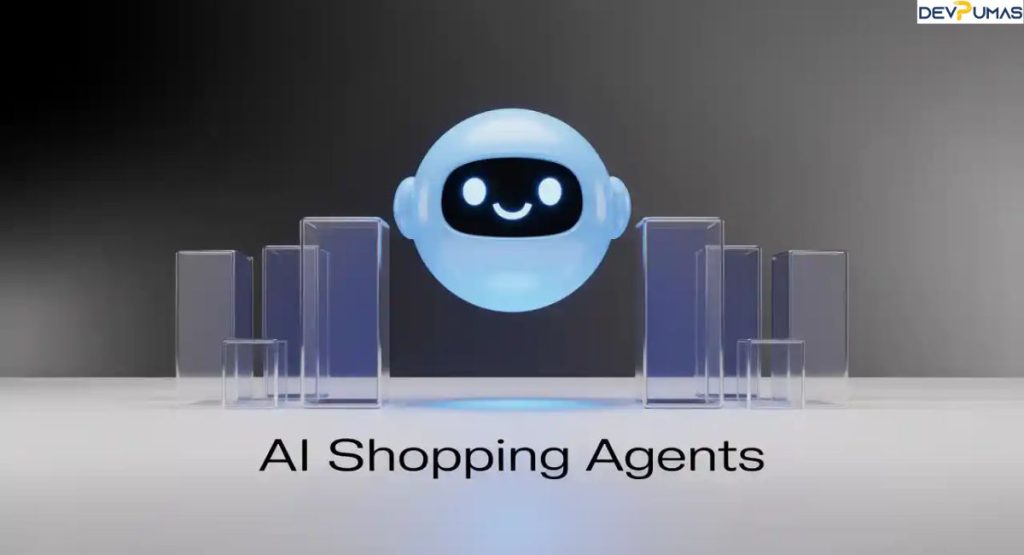
AI Shopping Agents

AI Shopping Agents: How Chatbots are Reshaping E-commerce in 2025

Introduction The year 2025 marks a big turning point for online retail. AI Shopping Agents are no longer just simple chatbots. They are smart, adaptive, and capable of giving customers exactly what they want in seconds. For UK businesses, this means higher sales, happier customers, and a chance to stand out in a very competitive market. At DevPumas, we help companies design AI-powered shopping assistants that boost conversions and automate customer interactions. With the right tools, your business can make every customer feel like they are getting a personal shopper online. What Are AI Shopping Agents? AI Shopping Agents are advanced chatbots powered by machine learning and natural language processing. Unlike traditional bots, they don’t just answer questions. They understand buying behaviour, predict needs, and recommend products tailored to each customer. For example, if someone is browsing trainers, an AI Shopping Agent can suggest sizes in stock, matching socks, or even let the user know about upcoming sales. This type of personalisation in e-commerce builds trust and increases the chance of repeat purchases. Why AI Shopping Agents Are Trending in 2025 AI adoption in the UK e-commerce market is rising quickly. A 2024 Deloitte survey showed that 65% of retailers plan to invest in AI-powered tools. This trend continues because customers want shopping that is faster, easier, and more personalized. By 2025, AI Shopping Agents are not optional—they are expected. Shoppers prefer brands that offer real-time support, instant recommendations, and smooth checkout experiences. Businesses that ignore this risk falling behind. AI Shopping Agents vs Traditional Chatbots There is a clear difference between old chatbots and modern AI Shopping Agents. Chatbots follow scripts, while AI agents learn from data and adapt. Feature Traditional Chatbots AI Shopping Agents Responses Pre-programmed Dynamic & context-aware Learning ability None Improves with data Personalisation Limited Highly personalised Customer experience Average Engaging & human-like This shows why most UK businesses are replacing basic bots with intelligent AI assistants. Transforming Customer Experience in Online Shopping Online shopping has become more than just browsing and clicking. AI Shopping Agents can hold conversations like real sales assistants. They help customers pick the right product, check delivery options, and even suggest bundles. Take a UK fashion retailer as an example. By using AI, they improved up-selling by 35% because customers trusted the personalized recommendations. This kind of digital experience builds loyalty that traditional websites cannot. AI Shopping Agents in E-commerce 2025: Key Benefits The benefits of AI Shopping Agents in e-commerce are many. They reduce waiting time for support, give instant product matches, and help businesses cut customer service costs. According to McKinsey, companies using AI assistants see an average 20% sales increase. Faster responses, real-time data, and personalized suggestions mean more satisfied shoppers who return again and again. AI Shopping Agents and Voice Commerce Voice commerce is growing rapidly in the UK. Shoppers are using Alexa, Siri, and Google Assistant to search and order products. When combined with AI Shopping Agents, this creates a hands-free shopping experience. Imagine asking your device: “Find me a laptop under £700 with next-day delivery.” An AI agent can instantly compare options, apply discounts, and confirm the order. This makes voice AI a powerful channel for the future of retail. Real-World Examples of AI Shopping Agents in Action Amazon is already using advanced AI Shopping Agents to suggest items based on browsing history. UK retailer ASOS uses AI to recommend clothing styles. Supermarket giant Tesco is experimenting with conversational AI for food shopping. These real-world cases show that big players are already ahead. Smaller businesses can compete by adopting AI too, especially with the help of companies like DevPumas who design custom AI e-commerce solutions. Challenges and Ethical Questions Around AI Shopping Agents With all benefits come challenges. Data privacy is a top concern. Customers in the UK want assurance that their data is safe. Another issue is bias in algorithms, where AI might favour certain products. There’s also the question of job automation. Some worry that human support teams may shrink. However, experts argue that AI will not replace jobs but will shift them toward AI management and training roles. How Businesses Can Use AI Shopping Agents in 2025 UK businesses can start by identifying customer pain points. Then, they should select the right AI agent software that integrates with their e-commerce platforms. At DevPumas, we build tailored AI chatbots that link with CRMs, online stores, and payment systems. This ensures that your AI Shopping Agent isn’t just smart—it’s also profitable for your business. The Future of AI Shopping Agents in E-commerce Looking ahead, AI Shopping Agents will become every shopper’s digital companion. They will combine augmented reality shopping, voice AI, and predictive analytics to give experiences close to in-store shopping. By 2025 and beyond, businesses that use AI agents will not just sell products—they will sell personalized experiences. This is the true future of online retail. FAQs 1. What are AI Shopping Agents in e-commerce? AI Shopping Agents are smart chatbots that help customers find products, compare prices, and complete purchases using artificial intelligence. 2. How are AI Shopping Agents different from traditional chatbots? Unlike simple chatbots, AI Shopping Agents use advanced machine learning and NLP to provide personalized recommendations and real-time shopping support. 3. Why are AI Shopping Agents important in 2025? In 2025, they enhance customer experience, boost sales, and reduce human support costs for online businesses in the UK and globally. 4. Can small businesses use AI Shopping Agents? Yes, small businesses can use affordable AI Shopping Agent tools to automate support, handle FAQs, and improve shopping conversions. 5. What is the future of AI Shopping Agents in e-commerce? The future lies in voice commerce, hyper-personalisation, and seamless integration across all online platforms. Conclusion The rise of AI Shopping Agents is changing e-commerce in the UK faster than ever. They deliver personalised, engaging, and convenient experiences that traditional systems cannot match. If you’re ready to transform your e-commerce store, DevPumas can help you design AI-powered shopping assistants that boost

AI Shopping Agents: How Chatbots are Reshaping E-commerce in 2025 Read More »

AI in Cybersecurity

AI in Cybersecurity: Benefits, Use Cases, and Future Trends

Introduction to AI in Cybersecurity In today’s digital world, AI in cybersecurity has become a powerful shield against growing cybersecurity threats and sophisticated cyberattacks. Traditional methods are no longer enough to handle modern challenges like zero-day threats, polymorphic malware, and hidden network traffic anomalies. By using AI-powered security automation, businesses can build stronger cyber resilience and improve their security frameworks. Intelligent threat detection systems, incident response automation, and vulnerability scanning now work faster and smarter with data-driven security What is AI in Cybersecurity? When we ask, what is AI in cybersecurity?, we are talking about using smart algorithms to keep networks safe. Unlike traditional software that follows fixed rules, AI adapts and learns from every attack. That makes it perfect for spotting network traffic anomalies or hidden zero-day threats that normal tools miss. AI also includes the role of machine learning in cybersecurity. With ML, systems grow smarter with each event, building better defences over time. This is why AI vs traditional cybersecurity tools is not even a fair fight anymore. AI brings speed, adaptability, and continuous learning that older tools simply lack. Why is AI in Cybersecurity Important? AI matters because attackers are more sophisticated than ever. From polymorphic malware that changes shape to escape scanners, to large-scale phishing campaigns, threats no longer look the same twice. That makes human monitoring alone impossible. How AI helps in cybersecurity is by automating the detection and response in real time. For the UK, this is especially important with security frameworks like GDPR requiring strict data protection. Financial institutions, government agencies, and healthcare providers all depend on AI-powered security automation to stay compliant. In many cases, a fast AI-driven response is the only barrier between a safe business and a major data breach. Key Applications of AI in Cybersecurity The most powerful use of AI is in AI for threat detection and response. AI systems can scan millions of data points in seconds, identifying suspicious patterns faster than any human analyst. This helps prevent fraud in banking, catch insider threats in offices, and strengthen cyber resilience across industries. Another key application is in threat management tools. AI supports incident response automation, vulnerability scanning, and risk prioritization. This means organisations know exactly which risks matter most, and they can deal with them quickly. By applying predictive analytics in security, companies can even anticipate future attacks before they happen. Core AI Technologies Powering Cybersecurity Behind the scenes, different AI technologies drive this new wave of protection. How deep learning detects malware is one of the most exciting areas. Deep learning allows AI to scan massive amounts of files, spotting the tiniest sign of infection. Unlike old methods, it can even identify polymorphic malware that changes its code constantly. Another core area is User and Entity Behavior Analytics (UEBA). These systems watch how employees and devices normally behave. When something unusual happens, such as a sudden login from another country, UEBA raises the alarm. With NLP, AI can also detect fake messages and phishing scams by reading the text itself. Benefits of Using AI in Cybersecurity The first and most obvious benefits of AI in cybersecurity is speed. Traditional tools can take hours to find problems, while AI responds in seconds. It does not just detect threats, it stops them instantly. This creates stronger cyber resilience for UK businesses. Another benefit is cost savings. By automating tasks in the security operations center (SOC), AI reduces the need for endless manual work. Companies spend less on recovery from breaches and more on growth. AI also supports better risk prioritization, ensuring teams focus only on the most urgent issues. Challenges and Risks of AI in Cybersecurity Despite the many advantages, there are serious challenges of AI in cybersecurity. The first is the high cost of adoption, especially for smaller UK businesses. Many SMEs lack resources to invest in AI-based threat intelligence platforms. Another issue is bias: AI can sometimes misjudge alerts, creating false positives that waste time. A second concern is the rise of AI-driven cyberattacks. Hackers also use generative AI in cybersecurity to create fake emails, launch scams, and design malware. The very tools protecting us can also be weaponised. This dual nature makes AI both a shield and a sword in the fight against cybercrime. Popular AI-Powered Cybersecurity Tools Today, we see many examples of AI in cybersecurity across industries. UK banks rely on best AI tools for cybersecurity like Darktrace and CrowdStrike. These platforms use threat intelligence platforms to predict attacks before they occur. Healthcare organisations use AI to guard patient data from theft. Case Study: A major UK retailer adopted AI-based incident response automation in their SOC. Within three months, they cut their response time to cyberattacks from hours to under five minutes. This change not only saved money but built trust with customers. Latest Developments and Trends in AI Cybersecurity The newest trend is generative AI in cybersecurity. While often seen as risky, it also allows defenders to simulate attacks and prepare better responses. Another trend is the use of zero-trust security frameworks, which assume every device or user could be compromised until proven safe. Biometric logins, blockchain-powered security, and AI-driven vulnerability scanning are also shaping the field. UK companies increasingly depend on these tools to meet rising threats. These changes show that the future of AI in cybersecurity will be deeply tied to constant innovation. Future of AI in Cybersecurity When we ask, is AI the future of cybersecurity?, the answer is yes. By 2030, experts believe AI will be the foundation of most security operations centers worldwide. Automated defence systems will act instantly, leaving little room for hackers to exploit. For the UK, this means stronger national defence, safer financial systems, and improved digital sovereignty. The future of AI in cybersecurity will likely blend human intelligence with smart machines, creating a new balance that ensures lasting protection against ever-changing threats. FAQs How is AI being used in cybersecurity? AI is used for threat detection, vulnerability scanning, incident response automation,

AI in Cybersecurity: Benefits, Use Cases, and Future Trends Read More »

Google's Gemini Push into Siri and Android

Google’s Gemini Push into Siri and Android: Pros, Cons, and What’s Next

Introduction Google’s Gemini Push into Siri and Android marks a major shift in AI-powered security automation and predictive analytics in security for everyday users and businesses. With this integration, generative AI in cybersecurity is no longer limited to research labs but is moving directly into AI chatbots and virtual assistants on Android and iOS devices. This initiative promises enhanced cyber resilience, smarter threat detection systems, and faster incident response automation. Users can expect AI for threat detection and response to become more intuitive, while businesses can leverage user and entity behavior analytics (UEBA) to reduce risks. The move highlights how AI vs traditional cybersecurity tools is evolving. What is Google’s Gemini AI? Google’s Gemini AI is an advanced artificial intelligence platform designed to enhance mobile assistants and integrate deeply into operating systems like iOS and Android. It uses machine learning in cybersecurity to improve threat detection systems, vulnerability scanning, and user and entity behavior analytics (UEBA). This AI is not only for conversational tasks but also focuses on improving device security, app intelligence, and productivity for everyday users and businesses. Gemini AI represents a leap in AI-powered security automation and generative AI in cybersecurity, giving users a smarter, context-aware experience. Gemini is built to outperform traditional assistants by learning user patterns and predicting needs. Its architecture supports network traffic anomalies detection and risk prioritization in real-time. By combining AI for threat detection and response with advanced natural language processing, Gemini ensures safer and more personalized interactions. For businesses using SaaS products, AI chatbots, or e-commerce automation, Gemini provides an opportunity to streamline operations while maintaining cyber resilience and reliable security frameworks. Why is Gemini Coming to Siri and Android? Google is integrating Gemini into Siri and Android to stay competitive in the AI assistant market. By combining AI-powered security automation and predictive capabilities, Gemini enhances user experience and strengthens mobile security. Users benefit from smoother app interactions, smarter recommendations, and faster AI responses, while developers gain access to threat intelligence platforms and AI for threat detection and response capabilities. This integration aligns with the growing trend of AI-driven personalization and data-driven security. The move also creates opportunities for businesses and developers to innovate. Gemini’s AI can improve web scraping, DevOps enablement, and AI Agent & Chatbot Apps for companies seeking automation and smarter workflows. For example, businesses leveraging Gemini can use incident response automation and predictive analytics in security to minimize risks and optimize operations. Users and enterprises alike will see Gemini’s impact across devices, apps, and services, making it a critical tool in today’s AI ecosystem. That’s why Google’s Gemini Push into Siri and Android. Pros of Google’s Gemini Push into Siri and Android The pros of Google’s Gemini Push into Siri and Android are substantial. Users will enjoy faster, more accurate AI responses and personalized assistance, enhancing productivity across devices. Businesses can leverage AI-powered security automation to detect zero-day threats, polymorphic malware, and network traffic anomalies early. Gemini’s integration also supports threat intelligence platforms and user and entity behavior analytics (UEBA), improving operational efficiency and safety. In addition, companies using Gemini can benefit from smarter AI chatbots, e-commerce automation, and SaaS products. A table below highlights key advantages of Gemini over traditional AI assistants: Feature Traditional AI Assistant Gemini AI Threat Detection Limited Real-time & predictive Personalization Basic Context-aware & adaptive Integration Separate apps Native with iOS & Android Business Support Minimal Supports AI chatbots & SaaS Security Reactive Proactive with UEBA & predictive analytics Cons of Google’s Gemini Push into Siri and Android Despite its benefits, Google’s Gemini Push into Siri and Android comes with challenges. Data privacy is a major concern, as the AI collects user data to optimize responses. Users may also face potential AI bias or inaccurate predictions. Over-reliance on AI-powered security automation could expose systems if not properly monitored. Performance may vary across older Android devices, affecting user experience. For businesses, integrating Gemini may require investment in security frameworks, threat management tools, and cyber resilience strategies. While Gemini enhances AI for threat detection and response, companies must maintain vigilance against vulnerabilities and ensure compliance with local regulations. Developers adopting Gemini for web & mobile development or AI chatbots should also consider scalability and long-term maintenance. How This Impacts Businesses and Developers The Gemini push offers both opportunities and responsibilities for businesses and developers. UK companies can leverage Gemini to build smarter AI Agent & Chatbot Apps, improve web & mobile development, and optimize SaaS products. By integrating incident response automation and predictive analytics in security, businesses enhance cyber resilience and reduce downtime. Gemini enables faster, data-driven decision-making, boosting operational efficiency and customer satisfaction. Developers gain access to tools for vulnerability scanning, threat intelligence platforms, and user and entity behavior analytics (UEBA). Startups and enterprises can innovate with e-commerce automation, DevOps enablement, and AI-powered customer engagement. This technology empowers UK businesses to remain competitive while adopting advanced AI for threat detection and response, creating safer and smarter digital products. Future of AI Assistants: What’s Next After Gemini? The future of AI assistants promises even deeper integration and smarter intelligence. After Gemini, AI will focus on generative AI in cybersecurity, predicting network traffic anomalies, and improving risk prioritization. Assistants will become more proactive, detecting threats, managing vulnerabilities, and streamlining business processes automatically. Developers will integrate AI into WordPress services, web scraping, and SaaS solutions to provide smarter tools for end-users. Emerging trends will also emphasize data-driven security, AI-powered security automation, and user and entity behavior analytics (UEBA). AI assistants will serve as a central hub for business operations, security monitoring, and customer engagement. By adopting these technologies early, UK companies can maximize efficiency, safety, and profitability. How DevPumas Can Help You Leverage Gemini’s AI At DevPumas, we specialize in helping businesses harness the power of Gemini AI. Our AI Agent & Chatbot Apps, Web & Mobile Development, SaaS Products, E-commerce Automation, Web Scraping, WordPress Services, and DevOps Enablement allow companies to integrate Gemini seamlessly. Using our services, businesses gain smarter AI for threat detection

Google’s Gemini Push into Siri and Android: Pros, Cons, and What’s Next Read More »

python in 2025

Python in 2025: Why You Should Learn It Now

Introduction:   Python has been a top programming language for over ten years. Its popularity keeps growing strong. If you’re asking yourself, “Should I learn Python in 2025?”, the answer is a resounding yes.Learning Python in 2025 is a smart career choice. Its simplicity and versatility make it popular in many areas. Python is popular in many areas. These include artificial intelligence, data science, web development, and automation. This guide looks at why Python is still important, its future, and how to begin. By the end of this article, you’ll see why learning Python in 2025 is a smart choice. It can lead to great job opportunities with high pay. 1. The Growing Importance of Python in 2025 1.1 Python’s Dominance in the Tech Industry  Python has always been one of the top programming languages. It ranks high in both the TIOBE Index and Stack Overflow’s Developer Survey. Its readability and large libraries make it popular. It also has strong community support, attracting both beginners and experts. 1.2 High Demand for Python Skills Many companies use Python. These include startups and big names like Google, Facebook, and Netflix. They rely on it for development, data analysis, and machine learning. Learning Python in 2025 ensures you remain competitive in the job market. 1.3 Python in Emerging Technologies Fields like AI, machine learning, and blockchain heavily depend on Python. Frameworks like TensorFlow, PyTorch, and Scikit-learn make Python indispensable for future tech innovations. 2. Key Reasons to Learn Python in 2025 2.1 Ease of Learning and Readability By the end of this article, you’ll see why learning Python in 2025 is a smart choice. It can lead to great job opportunities with high pay. 2.2 Versatility Across Domains Whether you’re interested in: 2.3 Strong Community and Support Python has a large community. You can always find help, tutorials, and open-source projects to join. 2.4 High Salary Potential Python developers earn good salaries. Average pay is between $90,000 and $150,000 each year. This depends on their skills and where they work 2.5 Future-Proof Career As automation and AI grow, Python’s relevance will only increase. Learning Python in 2025 means securing a skill that will remain in demand for years. 3.3 Career Opportunities in AI with Python AI engineers, data scientists, and ML specialists who know Python are some of the highest-paid workers today. 4. Python for Web Development  4.1 Popular Python Web Frameworks Django (Full-stack framework) Flask (Lightweight and flexible) FastAPI (Modern API development) 4.2 Why Companies Use Python for Web Apps Python is a top choice for startups and big companies due to its scalability, security, and fast development. Frameworks like Django and Flask simplify web application development with built-in security features. Python’s rich ecosystem of libraries and third-party tools accelerates development and reduces costs. It also supports high-performance applications, handling large user bases efficiently. Additionally, Python’s strong community and continuous updates make it a reliable choice for modern web applications. 5. Automation and Scripting with Python 5.1 Simplifying Repetitive Tasks Python scripts can automate tasks like file handling, web scraping, and email responses. You can use tools like BeautifulSoup and Scrapy for web scraping 5.2 Python in DevOps Python plays a crucial role in DevOps by automating tasks, managing infrastructure, and streamlining CI/CD pipelines. Tools like Ansible and Docker rely on Python for infrastructure automation, making server provisioning and configuration management more efficient. Python also supports cloud automation through SDKs like AWS Boto3 and Azure SDK. It enhances monitoring and logging by working with tools like Prometheus and ELK Stack. Additionally, Python helps in containerization, security compliance, and workflow orchestration, making it an essential language for DevOps engineers.  6. Python for Data Science and Analytics 6.1 Essential Python Data Science Libraries Pandas (Data manipulation) NumPy (Numerical computing) Matplotlib & Seaborn (Data visualization) 6.2 How Python is Used in Big Data Python plays a significant role in big data processing due to its simplicity and powerful libraries. It works well with big data platforms like Hadoop and Apache Spark, thanks to tools like PySpark. Python’s extensive data science libraries, such as Pandas and NumPy, help in data manipulation and analysis. Machine learning frameworks like TensorFlow and Scikit-learn integrate seamlessly with big data for predictive analytics. Additionally, Python automates data pipelines, making it easier to process, analyze, and visualize large datasets efficiently. 7. Python in Cybersecurity & Ethical Hacking Python is a powerful language widely used in cybersecurity and ethical hacking due to its simplicity, flexibility, and vast library support. It helps in penetration testing with tools like Scapy and Metasploit, allowing security experts to identify vulnerabilities. Python’s automation capabilities streamline security tasks like log analysis, malware detection, and network scanning. Libraries such as Requests and BeautifulSoup assist in web scraping for threat intelligence.  Python also enables cryptography with libraries like PyCrypto and hashlib for secure data encryption. Ethical hackers use Python for scripting exploits and simulating cyberattacks to test system defenses. Its integration with security tools makes it essential for modern cybersecurity operations. 7.1 Why Python for Cybersecurity? 7.2 Python in Ethical Hacking Python is a powerful and versatile programming language that plays a crucial role in ethical hacking. Its simplicity, flexibility, and extensive library support make it a top choice for security professionals looking to identify and mitigate vulnerabilities. Ethical hackers use Python for various security-related tasks, including penetration testing, network scanning, password cracking, web scraping, and malware analysis. Penetration Testing – Python is widely used for penetration testing, as it enables security experts to test network and application vulnerabilities. Tools like Metasploit and Scapy help simulate cyberattacks, identify security loopholes, and enhance system defenses. Python scripts can automate various attack scenarios, making penetration testing more efficient. Network Scanning – Ethical hackers use Python scripts to scan open ports and detect security weaknesses. The socket module and tools like nmap allow scanning of entire networks to find exposed services and potential vulnerabilities. This helps organizations strengthen their cybersecurity posture by identifying weak points before attackers exploit them. Password Cracking – Python is

Python in 2025: Why You Should Learn It Now Read More »

What is an Agent

What Is an Agent? Definition, Types, Responsibilities, and Future

Introduction to Agents An agent is a person or entity authorized to act on behalf of a principal, creating a fiduciary relationship built on trust and responsibility. Through agency law, an attorney, stockbroker, real estate agent, or even an insurance agent can carry out important real estate transactions, financial decisions, or negotiations. Agents follow strict confidentiality agreements and must respect contract law, fulfilling duties like the duty of loyalty, duty of care, and duty of disclosure. From business contracts to AI-driven systems, agents shape decisions that influence everyday life. Understanding the Principal-Agent Relationship The principal-agent relationship allows a principal to give authority to an agent to act on their behalf. This can be through an agency agreement, a power of attorney, or even through an agency by necessity when urgent action is required. Such relationships are central to modern transactions, from real estate deals to corporate contracts. This relationship depends on the confidentiality duty of the agent. For example, an attorney cannot share client secrets, and a stockbroker must keep investment strategies private. If these rules are broken, it creates a conflict of interest in agency and may lead to agent liability. Strong trust is what makes this relationship valuable in both personal and business life. Types of Agents  There are several types of agents, and their roles differ depending on the authority given. A general agent vs special agent is a common comparison. A general agent has broad powers to manage multiple tasks for the principal, while a special agent is limited to one specific duty. A universal agent authority is rare but gives the agent almost complete control over the principal’s matters. In practice, there are many everyday agents. A talent agent promotes artists, a travel agent books holidays, a stockbroker as agent manages trades, and an insurance agent sells policies. Each role is defined by express authority (clearly given powers) or implied authority (powers assumed by the nature of the role). Comparison of Agent Types Type of Agent Scope of Authority Example General Agent Broad, ongoing tasks Business manager Special Agent Limited to one action Real estate sale Universal Agent Almost unlimited Holder of power of attorney Duties and Responsibilities of an Agent An agent must follow several duties under fiduciary duty. The duty of loyalty requires agents to prioritize the principal’s interests over their own. The duty of care ensures they act with skill and caution, while the duty of obedience means following instructions. The duty of disclosure requires agents to share important facts with the principal. Agents must also maintain the duty of separation, which means keeping their own finances separate from the principal’s. This prevents problems with separation of accounts in agency. For example, if a commission-based agent mixes personal funds with the principal’s, it may lead to disputes, legal action, and agent liability. Legal and Financial Liabilities of Agents Under agency law and contract law, agents face serious responsibilities. If an agent violates confidentiality agreements, accepts a material benefit without approval, or engages in usurpation of principal rights, they can be held legally responsible. Courts often impose fines, order compensation, or even cancel contracts due to such violations. Payment for agents also matters. Some receive fixed agent compensation, while others earn as commission-based agents. If payments are unclear, disputes may arise. Transparency is important to avoid mistrust, and both express authority and implied authority must be respected in financial transactions. How Agents Are Used in Real Life Agents are part of many industries in the USA. A registered agent is legally required for corporations to handle lawsuits and state filings. An estate planning agent helps people write wills and manage assets. A travel agent assists with trips, and an insurance agent ensures coverage against risks. There are also cases of agency by necessity, where an agent acts without prior approval in emergencies. For instance, if a shipping company makes urgent decisions to save goods at sea, it acts as an agent by necessity. These examples show that agents remain important in daily life, business, and law. Agents in Business  In business, agents are central to success. A legal agent negotiates contracts, manages deals, and ensures compliance with contract law. A licensed agent provides expertise in industries like finance and insurance, helping companies avoid mistakes and legal issues. Corporations depend heavily on registered agents to receive legal notices, tax documents, and lawsuits. Without them, companies may face fines or lose credibility. Agents in the corporate world combine knowledge of agency law with practical skills to ensure businesses run smoothly. Benefits of Hiring an Agent Hiring an agent provides clear benefits. For individuals, it saves time and ensures expertise. A real estate agent simplifies property deals, while an attorney protects legal rights. For companies, hiring a licensed agent or registered agent ensures compliance with state and federal laws. Another benefit is trust. Since agents work under a fiduciary relationship, they follow duties of honesty and loyalty. This makes principals confident that their interests are protected. As one legal scholar stated, “Without agents, modern business would collapse under the weight of its own complexity.” Challenges and Risks of Agents While agents provide benefits, they also come with risks. An agent may fail to meet the duty of care, misuse authority, or breach confidentiality agreements. If this happens, the principal may face financial loss, legal issues, or damaged reputation. Disputes often arise over agent compensation or unclear agency agreements. Problems like competition conflict or conflict of interest in agency can also occur. This is why principals must choose trustworthy agents, often requiring them to be a licensed agent or registered agent. Future of Agents The future of agents will evolve with technology. Some roles, like travel agents, are being replaced by digital platforms. However, roles that require trust, like attorneys, real estate agents, and estate planning agents, will remain vital. These jobs depend on fiduciary duty, which technology cannot fully replace. Artificial intelligence may help agents by automating routine tasks, but the fiduciary relationship still requires

What Is an Agent? Definition, Types, Responsibilities, and Future Read More »

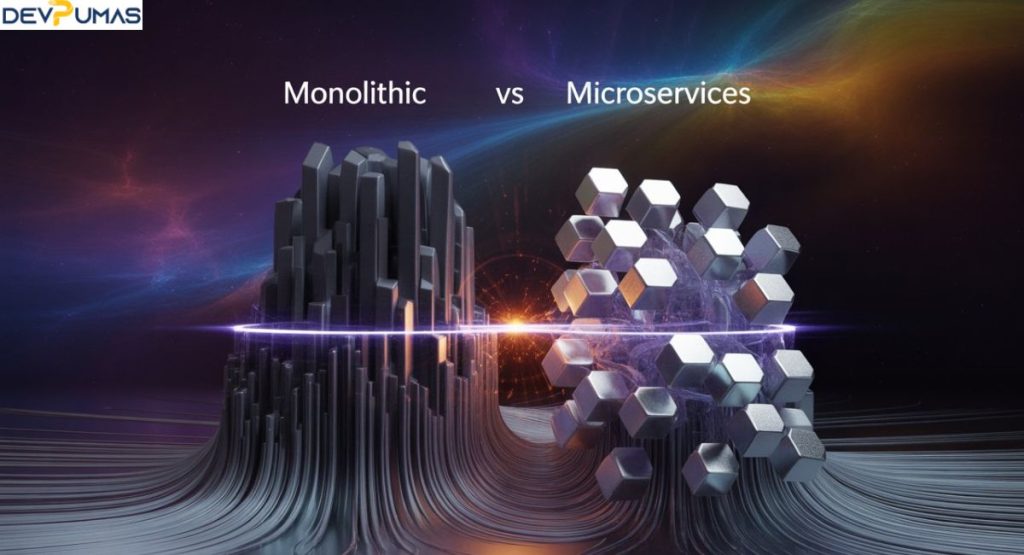
Monolithic vs Microservices

Monolithic vs Microservices: Which Architecture Fits Your Business?

Introduction Monolithic vs Microservices architectures are two of the most discussed approaches in modern software development. Understanding what is monolithic architecture and how microservices work is crucial for businesses planning scalable applications. A monolithic system combines all components into a single, unified platform, making it easier to develop initially but harder to scale. On the other hand, microservices architecture divides an application into smaller, independent services, allowing faster deployments, better fault isolation, and improved scalability. Choosing the right architecture impacts development speed, system performance, and long-term maintenance costs. This guide explores the benefits of microservices, pros and cons of monolithic systems, and how businesses decide the best fit. What is Monolithic Architecture? A monolithic application is built as a single, indivisible unit. It relies on a centralized code repository and a unified deployment model, which makes development straightforward. All functions of the software are tightly coupled, meaning changes in one part often require redeploying the entire system. This structure supports end-to-end testing and is easy for smaller teams to manage. Companies with simple apps, startups, or businesses that prioritize speed over flexibility often benefit from single codebase architecture. However, monolithic architectures can face application scalability issues as traffic grows. Redeployment challenges become significant when making small updates, and modernization of legacy systems can be costly. Businesses planning a cloud migration strategy may find monolithic systems harder to adapt, though they still support Agile development and DevOps integration in some cases. The architecture is suitable when teams need continuous integration (CI/CD) but want a simpler deployment pipeline. Key Features of Monolithic Apps Monolithic apps rely on a centralized code repository and unified deployment model. They use end-to-end testing to ensure all features work together. The architecture encourages a consistent organizational culture shift and supports simple Agile development practices. Businesses often benefit from predictable development velocity, especially when service ownership is concentrated. Feature Description Single codebase architecture All modules exist in one repository Unified deployment model Deployment of entire application at once End-to-end testing Ensures system-wide consistency DevOps integration Supports CI/CD pipelines Pros and Cons of Monolithic Architecture Advantages and disadvantages of monolithic applications depend on business size and goals. Pros include easier setup, simpler testing, and fewer inter-service dependencies. Cons are application scalability issues, redeployment challenges, and difficulties in legacy systems modernization. Monoliths work best for smaller teams or apps with stable requirements, but scaling them for complex modern needs can be restrictive. What are Microservices? Microservices explained with examples shows a modular approach where applications are split into small, independent services. Each service has its own deployment pipeline, can scale individually, and communicates via APIs. This enables distributed systems, service decomposition, and better API performance. Microservices also promote organizational culture shift by assigning service ownership to smaller, specialized teams. Companies often move from monolithic to microservices for better development velocity and Agile and DevOps with microservices. Netflix, for example, migrated using How Netflix migrated to microservices, while Atlassian’s Vertigo project illustrates Atlassian microservices case study. Microservices are ideal for businesses aiming for cloud-based microservices vs on-prem monolith flexibility, CI/CD pipelines in microservices deployment, and faster iteration cycles. Key Features of Microservices Microservices support service decomposition, stateless architecture, and multi-tenant systems. They facilitate automation and AI workflows, and allow companies to use tools for microservices migration and monitoring. Unlike monoliths, services can be updated independently without affecting the whole system. This approach is also beneficial for projects in ChatGPT, scheduled tasks, and complex AI assistant implementations. Pros and Cons of Microservices Pros: Microservices offer scalability, resilience, and faster development velocity. They are ideal for businesses adopting Agile development and CI/CD pipelines in microservices deployment. Cons: Challenges include microservices debugging and monitoring challenges, service sprawl and microservices complexity, and higher infrastructure migration costs. Understanding microservices infrastructure costs vs monolithic costs helps businesses balance investment and performance.  Key Differences Between Monolithic vs Microservices The differences between monolithic vs microservices architectures are significant. Monoliths use single codebase architecture, while microservices rely on service decomposition. Monolithic apps are easier to deploy but harder to scale, whereas microservices are flexible but require robust monitoring tools. The table below summarizes key differences: Aspect Monolithic Microservices Codebase Single Multiple services Deployment Unified Independent Scalability Limited Highly scalable Maintenance Challenging Easier for small services Testing End-to-end testing Service-level testing Performance and Scalability: Monolith vs Microservices Monolithic systems often face application scalability issues because the entire app must be scaled, leading to inefficiencies. Microservices provide stateless architecture and distributed systems that allow each service to scale independently. Businesses adopting microservices experience improved API performance and faster development velocity, which is critical for high-traffic applications. Cost Considerations: Which is More Affordable in the Long Run? Initially, monolithic systems are cheaper because of simpler deployment and fewer infrastructure needs. However, as apps grow, redeployment challenges and legacy systems modernization increase costs. Microservices require higher upfront investment in infrastructure migration but reduce long-term costs through modular updates and independent scaling. Balancing speed and reliability in microservices adoption ensures ROI. Security, Reliability, and Maintenance Factors Monolithic apps are easier to secure because everything is centralized, but any failure can impact the whole system. Microservices enhance service ownership and Agile and DevOps with microservices, improving reliability. Yet, they require careful debugging complexity management and monitoring tools. Understanding common challenges in microservices adoption helps businesses mitigate risks. Monolithic vs Microservices: Which Architecture Fits Your Business Needs? Monolithic vs Microservices architectures are essential considerations for businesses building modern applications. Understanding what is monolithic architecture and how microservices work helps companies choose the right approach for scalability, maintenance, and development speed. A monolithic system combines all components into a single platform, making it simpler initially but harder to update or scale. In contrast, microservices architecture breaks applications into smaller, independent services, enabling faster deployments, better fault isolation, and improved system performance. This comparison explores the benefits of microservices, pros and cons of monolithic systems, and guides businesses on choosing the architecture that fits their needs. Future of Monolithics/Microservices The future favors cloud-based microservices vs on-prem monolith solutions.

Monolithic vs Microservices: Which Architecture Fits Your Business? Read More »

What is ChatGPT?

What is ChatGPT? The Surprising Benefits, Uses, and Future

Introduction to ChatGPT ChatGPT is an advanced AI chatbot developed by OpenAI that allows users to have text-based conversation, voice conversation, and even complete tasks like data analysis, translate code, and generate content. It works through natural language processing (NLP), enabling it to process text, image, and audio inputs and respond in a human-like way. People in the UK use ChatGPT as a personalized AI assistant to brainstorm ideas, handle projects in ChatGPT, and create automation for AI workflows. Whether on the mobile app (iOS, Android), desktop app (Windows, macOS), or web, ChatGPT supports file upload, voice mode, and custom GPTs for more powerful, real-time conversation. Who Created ChatGPT? ChatGPT was developed by OpenAI, a research company focused on artificial intelligence. The company was co-founded by Sam Altman, Elon Musk, and others with the goal of creating safe, beneficial AI. Over the years, OpenAI built powerful AI models like GPT-3 and GPT-4, which form the core of ChatGPT’s intelligence. These models are trained on large amounts of data to answer questions, generate text, and support real-time conversation with humans. The team behind OpenAI designed ChatGPT as more than just an AI chatbot. It was developed as a flexible AI agent capable of knowledge base updates, custom instructions, and even form-filling automation. With features like ChatGPT canvas and ChatGPT agent, OpenAI has pushed the boundaries of what a web-enabled AI agent can achieve. How Does ChatGPT Work? At its core, ChatGPT works using natural language processing (NLP). This technology allows the system to translate natural language, analyze data, and interact with computers in ways humans find natural. The model breaks down words into tokens, predicts the next likely word, and builds a response that makes sense in context. This is why ChatGPT feels like you are having a real-time conversation with a human. ChatGPT does not only generate text. With the integration of advanced features, it can annotate images, convert mockups to code, upload files, and perform data visualization. By combining these abilities, it has become an all-in-one AI assistant capable of supporting businesses and individuals across multiple industries in the UK. Key Features and Benefits of ChatGPT The main strength of ChatGPT lies in its wide range of features. It can generate content, perform brainstorming, assist with projects in ChatGPT, and even manage scheduled tasks through automation. People use it to write emails, prepare reports, design marketing campaigns, and build custom GPTs with specific instructions. For businesses, the benefits include AI workflows that reduce manual work, form-filling automation for data entry, and the ability to create custom instructions for unique needs. Students and professionals in the UK also use ChatGPT for deep research, knowledge base updates, and to brainstorm ideas for academic or business projects. How to Use ChatGPT on Web, Mobile, and Desktop ChatGPT can be used across multiple platforms. The web search version allows quick access through any browser, while the mobile app (iOS, Android) gives users a portable AI assistant. For those working on computers, the desktop app (Windows, macOS) makes it easier to manage projects in ChatGPT and handle file upload tasks. The platform also includes advanced tools like voice mode, where you can hold voice conversation with the AI. Users can enable custom GPTs and custom instructions to personalize interactions. Features like ChatGPT canvas allow for automation of workflows and smooth management of AI projects. Free vs Paid: What is ChatGPT Plus? The free version of ChatGPT gives access to basic AI models and allows you to answer questions, generate content, and perform everyday tasks. However, during busy times, free users may face delays or limits on advanced features like image generation or data analysis. ChatGPT Plus is a paid subscription that offers priority access, faster responses, and access to the latest model, GPT-4. In the UK, it is popular among professionals who need reliable AI workflows, support for automation, and enhanced features for business AI projects. Popular Uses of ChatGPT in 2025 By 2025, ChatGPT has grown into a widely adopted AI chatbot across the UK. Businesses use it for automated workflows, customer service, and even real-time conversation with clients. Universities and students rely on it for deep research, brainstorming, and translation of natural language tasks. Entertainment and media industries benefit from image generation, data visualization, and convert mockups to code. Healthcare professionals in the UK use ChatGPT for analyzing data, knowledge base updates, and scheduled tasks in medical reporting. The flexibility of ChatGPT agent has made it essential for daily operations. Sector Use Case Example Education Brainstorming essays, deep research Business Automate workflows, form-filling automation Healthcare Analyze data, manage scheduled tasks Media Image generation, create custom instructions Tech Translate code, build custom GPTs Is ChatGPT Safe and Reliable? Many users in the UK ask whether ChatGPT is safe. The platform is designed with strict safety measures to prevent harmful outputs. However, like all AI models, it may sometimes provide incorrect or biased answers. OpenAI continues to improve knowledge base updates and web-enabled AI agent tools to make the system more reliable. For sensitive uses such as healthcare, finance, or legal fields, users must double-check outputs. While ChatGPT can answer questions, generate content, and support automation, final responsibility always rests with the human using it. This balance ensures that the AI assistant acts as a support tool rather than a replacement for professional judgment. Future of ChatGPT  The future of ChatGPT looks promising. Experts expect more advanced AI workflows, better real-time conversation, and improved data visualization. The addition of features like build custom GPTs, custom instructions, and AI workflow automation will make it even more powerful for both individuals and businesses. In the UK, ChatGPT is expected to expand into government services, healthcare management, and education systems. As AI chatbots evolve into more reliable AI agents, they may handle tasks like schedule tasks, interact with computer systems, and act as fully personalized AI assistants. This future highlights the role of AI in shaping everyday life. FAQs What does ChatGPT do? ChatGPT is an

What is ChatGPT? The Surprising Benefits, Uses, and Future Read More »

What is Artificial Intelligence (AI)

The Essential Guide to Artificial Intelligence (AI): Definition, Types & Future Applications

Introduction to Artificial Intelligence Artificial Intelligence (AI) is transforming how the world functions by enabling machines to think, learn, and make decisions like humans. It combines machine learning (ML), deep learning, neural networks, and natural language processing (NLP) to analyze data sets, recognize patterns, and perform complex tasks. From chatbots and virtual assistants like Siri and Alexa to autonomous vehicles, computer vision, and speech recognition, AI powers everyday tools and global industries. Innovations like generative AI, large language models (LLMs), ChatGPT, DALL-E, and MidJourney highlight its creativity. Businesses, healthcare, and education are adopting automation, predictive analytics, and robotics, making artificial intelligence the driving force of modern technology and the future of innovation. What is Artificial Intelligence? Artificial Intelligence, or AI, is the science of building machines that can think, learn, and act like humans. It is designed to replicate human intelligence by processing huge amounts of data sets, recognizing patterns, and making decisions. The core of AI lies in its ability to improve over time through self-correction and learning algorithms. The main goal of AI is to perform tasks that normally require human intelligence, such as speech recognition, computer vision, and predictive analytics. AI systems can be narrow, like a virtual assistant such as Siri, or they can aim for broader intelligence, often referred to as general AI (AGI). While narrow AI dominates today, research continues on how to achieve true human-like intelligence in machines. How Does AI Work? AI works through the combination of algorithms, data processing, and learning methods. First, huge volumes of data sets are collected, whether from text, images, videos, or real-time sensors. Then, AI applies supervised learning, unsupervised learning, reinforcement learning, or even semi-supervised learning to identify patterns. At its core, AI relies on neural networks and advanced architectures such as transformer architecture to process data. For example, large language models (LLMs) like ChatGPT use transformer-based designs to understand and generate human-like text. Similarly, computer vision systems allow autonomous vehicles to detect pedestrians and traffic signals in real-time. Key Types of Artificial Intelligence Researchers often classify AI models into four types. Reactive machines are the most basic; they respond to situations but don’t remember past experiences. Limited memory AI, such as self-driving cars, can recall past data for better decision-making. Theory of mind AI is still being developed, aiming to understand emotions and human behavior. The most advanced concept is self-aware AI, which remains theoretical. AI can also be divided into narrow AI and general AI (AGI). Narrow AI powers everyday tools like streaming recommendation engines on Netflix and business AI systems for fraud detection. AGI, on the other hand, would allow machines to perform any intellectual task that a human can, but experts believe this is still decades away. AI Type Example Capability Reactive Machines Chess-playing AI No memory, reacts only Limited Memory Self-driving cars Learns from past data Theory of Mind Future AI assistants Understand emotions Self-Awareness Not yet possible Human-like intelligence AI vs. Machine Learning vs. Deep Learning Many people confuse AI, machine learning (ML), and deep learning. AI is the broad science of making machines smart. Machine learning is a subset that uses algorithms to learn from data. Deep learning is a further subset that uses multi-layered neural networks to process complex data, like facial recognition. Think of AI as the “umbrella,” ML as one of the branches, and deep learning as the smaller branch extending from ML. For instance, AI powers a chatbot, ML helps Netflix suggest shows, and deep learning allows Facebook to recognize faces in photos. Major Applications of Artificial Intelligence AI is used in almost every industry today. In healthcare AI, it detects cancer through CT scans and predicts pandemics. In finance, AI enables fraud detection and predictive analytics for investments. Business AI improves customer management through CRM systems, while marketing AI helps personalize ads. In transportation, Uber AI use cases show how algorithms optimize ride-sharing. Education AI supports personalized learning, and environmental AI predicts wildfires and supports sustainability. Even entertainment platforms like Spotify use streaming recommendation engines powered by AI to suggest music. Why Artificial Intelligence is Important in 2025 In 2025, artificial intelligence is shaping the USA’s economy, workforce, and innovation. From automation in factories to AI regulation in law, its impact is everywhere. The rise of RPA (robotic process automation) has reduced repetitive tasks and improved efficiency across industries. AI is also becoming critical in climate change, healthcare innovation, and AI security threats such as adversarial ML and data poisoning. The need for ethical use, privacy in AI, and legal liability in AI is more important than ever as technology becomes deeply embedded in society. Advantages and Disadvantages of Artificial Intelligence The biggest advantage of AI is its speed and accuracy. It reduces human error, provides 24/7 automation, and offers predictive insights for businesses. For example, business AI tools detect fraud faster than humans ever could. However, disadvantages remain. Bias in AI and algorithmic bias can create unfair outcomes. Privacy in AI raises serious concerns about data usage. There is also the issue of job loss due to automation tools. The carbon footprint of AI is another problem as large models like LLMs consume massive energy. Future of Artificial Intelligence The future of AI will be defined by generative AI, ethical rules, and global competition. Tools like DALL-E and MidJourney show how AI enhances creativity, while domain adaptation and transfer learning improve how AI adapts to new tasks. Experts predict AI will play a major role in education AI, healthcare AI, environmental AI, and business automation. At the same time, governments will push for stricter AI regulation to manage copyright issues in AI and prevent AI security threats. The USA is expected to stay at the forefront of this global AI race. FAQs What is AI in simple words? AI is when machines are built to think, learn, and solve problems like humans. What are the 4 types of AI? The four types are reactive machines, limited memory, theory of mind, and self-awareness.

The Essential Guide to Artificial Intelligence (AI): Definition, Types & Future Applications Read More »

Rescue your company’s growth!

Let’s talk about your next development project, and we’ll connect you with the best team for the job.

CANADA

PAKISTAN

Copyright© 2023 DevPumas | Powered by DevPumas

1-1 Meeting with Our
CTO & get
your quotation within 2 hours!

Scroll to Top